


Repeated bee activity around a roofline, wall, chimney, or exterior column can signal that a colony has moved into the structure. Home & Hive provides professional honeybee removal for homes and businesses throughout The Colony and nearby North Texas communities.
With more than a decade of bee-removal experience, our family-owned company evaluates the colony, entry point, hive age, and accessibility before recommending swarm removal, the Bee Repellent Method, or full hive removal.
The Colony extends along the eastern shoreline of Lewisville Lake and includes established residential areas, newer development, parks, and landscaped commercial properties. These surroundings provide abundant forage, while buildings and mature trees can provide the sheltered cavities honeybees seek.
We commonly evaluate bee activity around:
These photos show actual removal situations we have encountered in The Colony, including established honeybee colonies hidden inside a bench and soffit as well as a Southern yellow jacket nest inside a barn. Hidden nests can become extensive before activity is obvious, which is why identifying the insect and the exact nesting location matters.
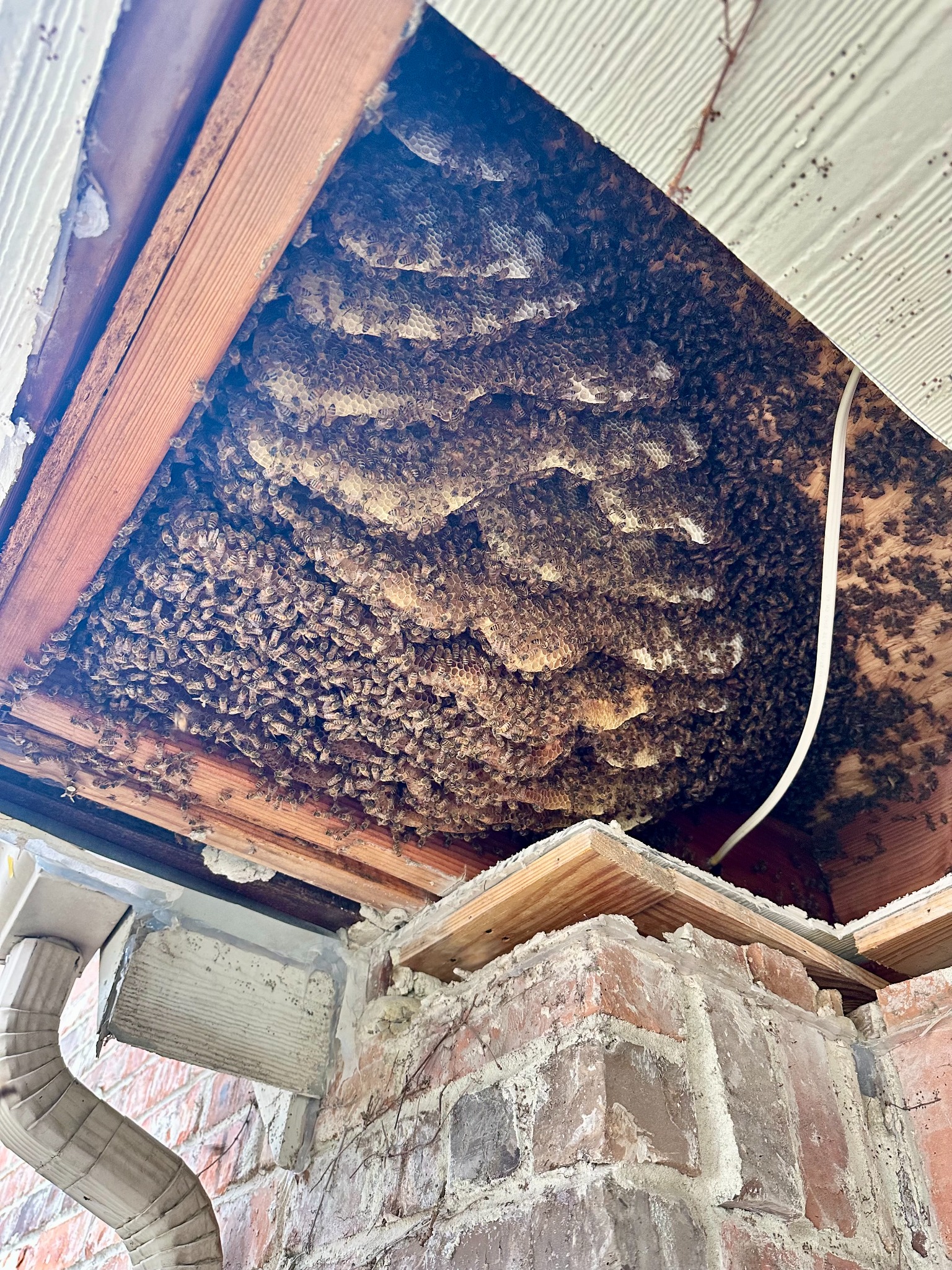
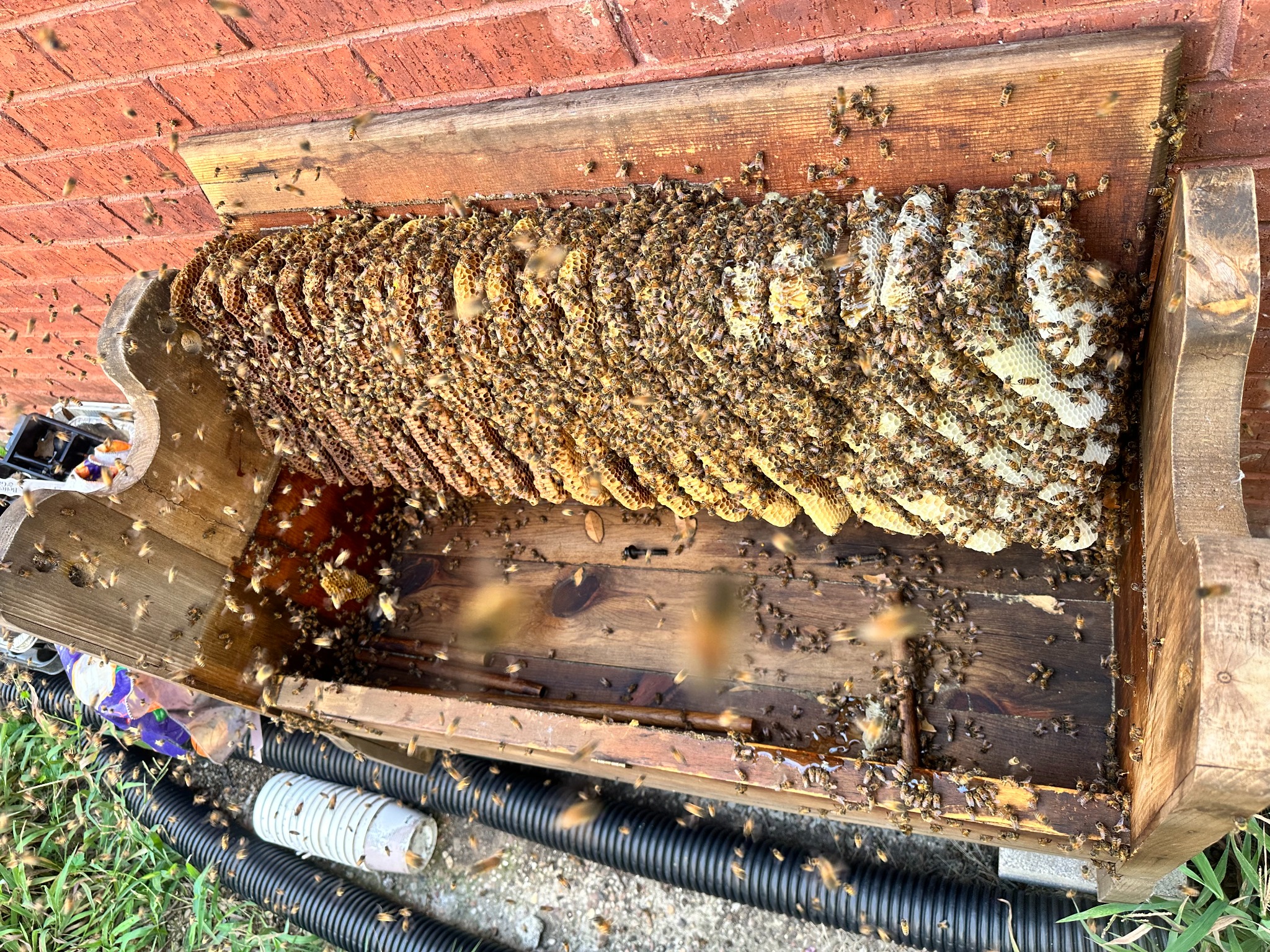
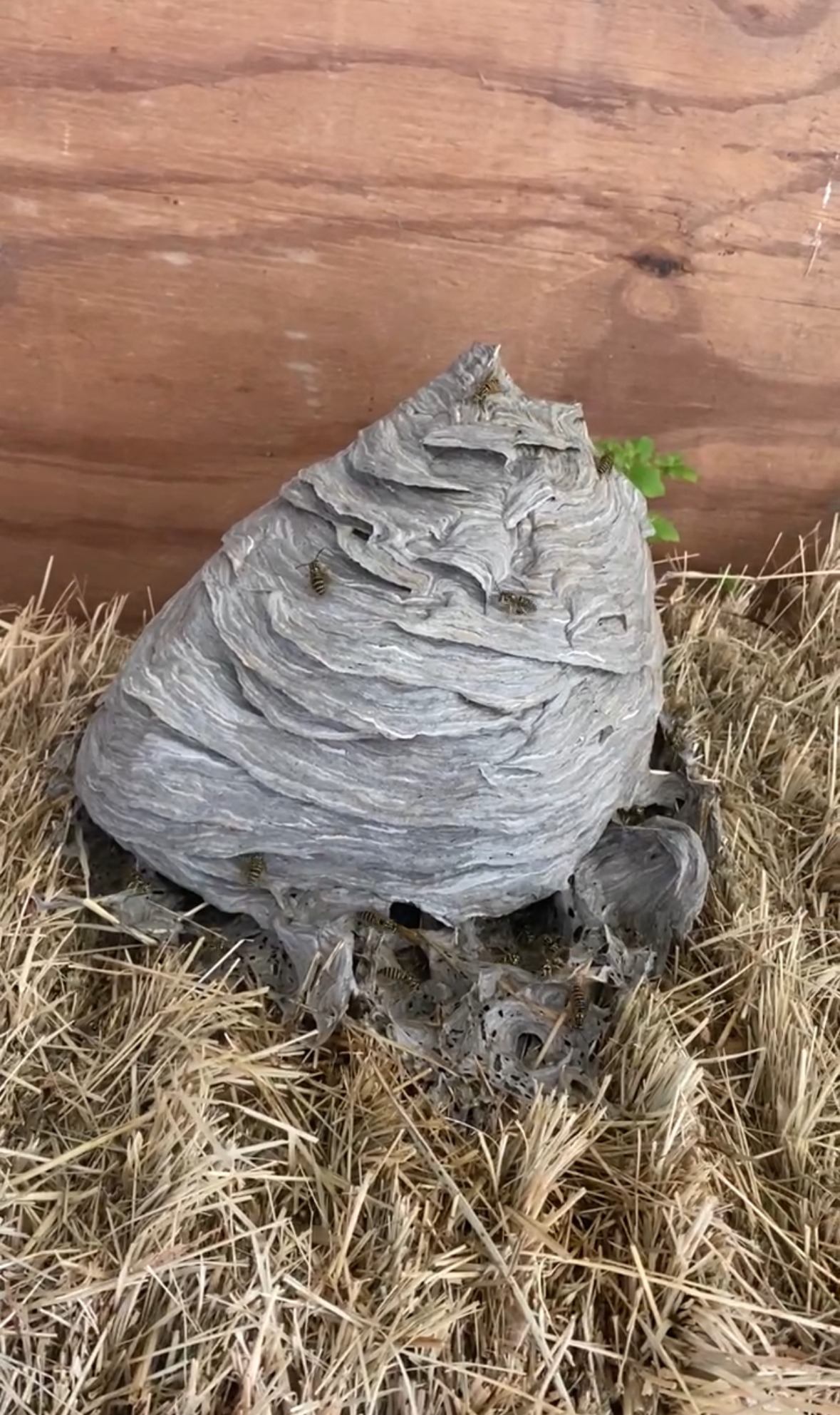
A temporary swarm is usually a visible cluster resting on an exposed surface. An active structural hive normally creates a repeatable flight pattern, with bees entering and leaving the same small opening throughout the day. The entrance may be only a narrow gap around trim, flashing, brick, or siding.
If activity remains concentrated in one location for several days, it is worth having the area evaluated before the colony becomes more established.
When a swarm is still gathered outside and can be reached safely, we may be able to collect and relocate it before it moves into a building.
For some newer colonies and locations that cannot reasonably be opened, our proprietary repellent approach may provide an alternative. This method has a specific timeline and is not the right solution for every established hive.
When comb and honey are established inside a structure, full removal is the most complete option. We access the cavity, remove the bees and hive material, clean the area, fill the void with insulation where appropriate, and reassemble the access area as described in the estimate.
Treating only the adult bees can leave wax, honey, brood, and hive odors behind. That material may leak, attract other insects, or encourage future swarms to investigate the same cavity. Our recommendation considers both the bees you see and what may remain inside the structure.
Home & Hive serves The Colony and surrounding communities including Little Elm, Frisco, Lewisville, Plano, and Carrollton. See our complete North Texas service area.
Not always, but repeated entry into the same chimney or roofline opening can indicate a colony in the chimney chase or an adjacent cavity. Photos or video of the flight path help us evaluate the likely location.
Closing an entrance while the hive is active can trap thousands of bees inside and may push them toward the home’s interior. The removal plan should be established before sealing.
A swarm may remain for a few hours or several days while scout bees search for a suitable cavity. Because timing is unpredictable, accessible swarms should be evaluated promptly.
Our estimates explain the access and reassembly included for the specific structure. Specialized finish work such as masonry, texturing, or painting may require another trade depending on the location.
Full hive removal includes a two-year warranty against a new swarm occupying the same location, subject to the written service terms. Other services have different warranty periods.
Call 972-439-6516 or request a free bee-removal estimate. Clear photos of the entrance, surrounding structure, and overall height help us recommend the most appropriate service.
Please fill out the form below and we will get back to you shortly.
or call us at:

 info@homeandhive.com
 5.0
5.0
 5.0
5.0