


Honeybees can occupy everything from a temporary branch to a hidden wall or ceiling cavity. Home & Hive provides professional honeybee removal in Denton for residential and commercial properties, with solutions based on the colony’s age, accessibility, and structural location.
We are a family-owned North Texas company with more than a decade of specialized experience. Depending on what the bees are doing, we may recommend swarm removal, our Bee Repellent Method, or complete hive removal.
Denton has historic districts, established postwar neighborhoods, mature tree cover, newer subdivisions, and active commercial areas. Older and newer structures can both develop bee problems: aging materials may create gaps, while complex modern rooflines and decorative masonry can contain protected voids.
Common areas to inspect include:
These photos show actual Denton honeybee-removal projects, including a large established soffit hive, comb hidden inside a wall, and a colony inside a water shutoff box. Honeybees can build in very different spaces, so locating the full colony is essential before choosing a removal method.
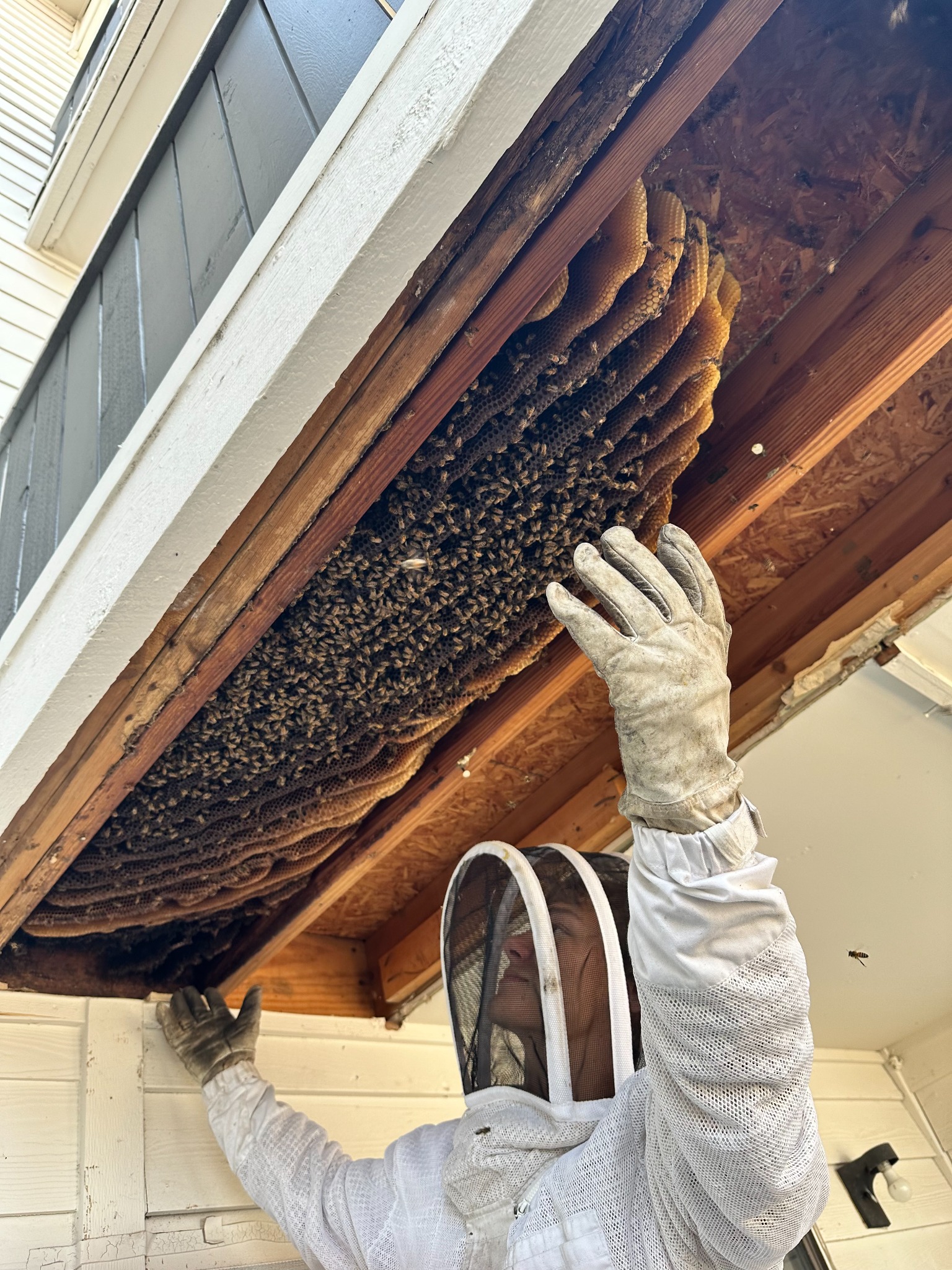
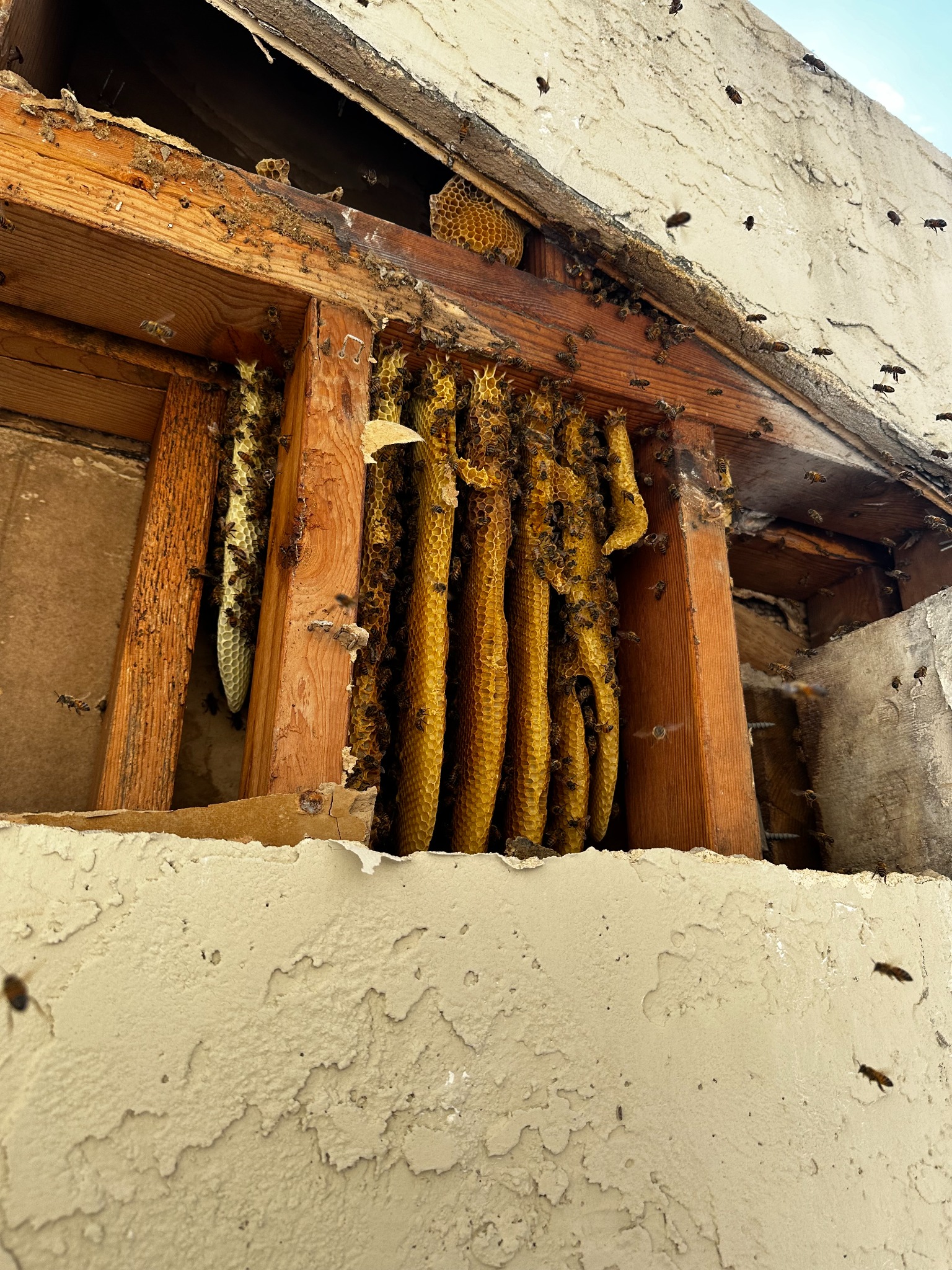
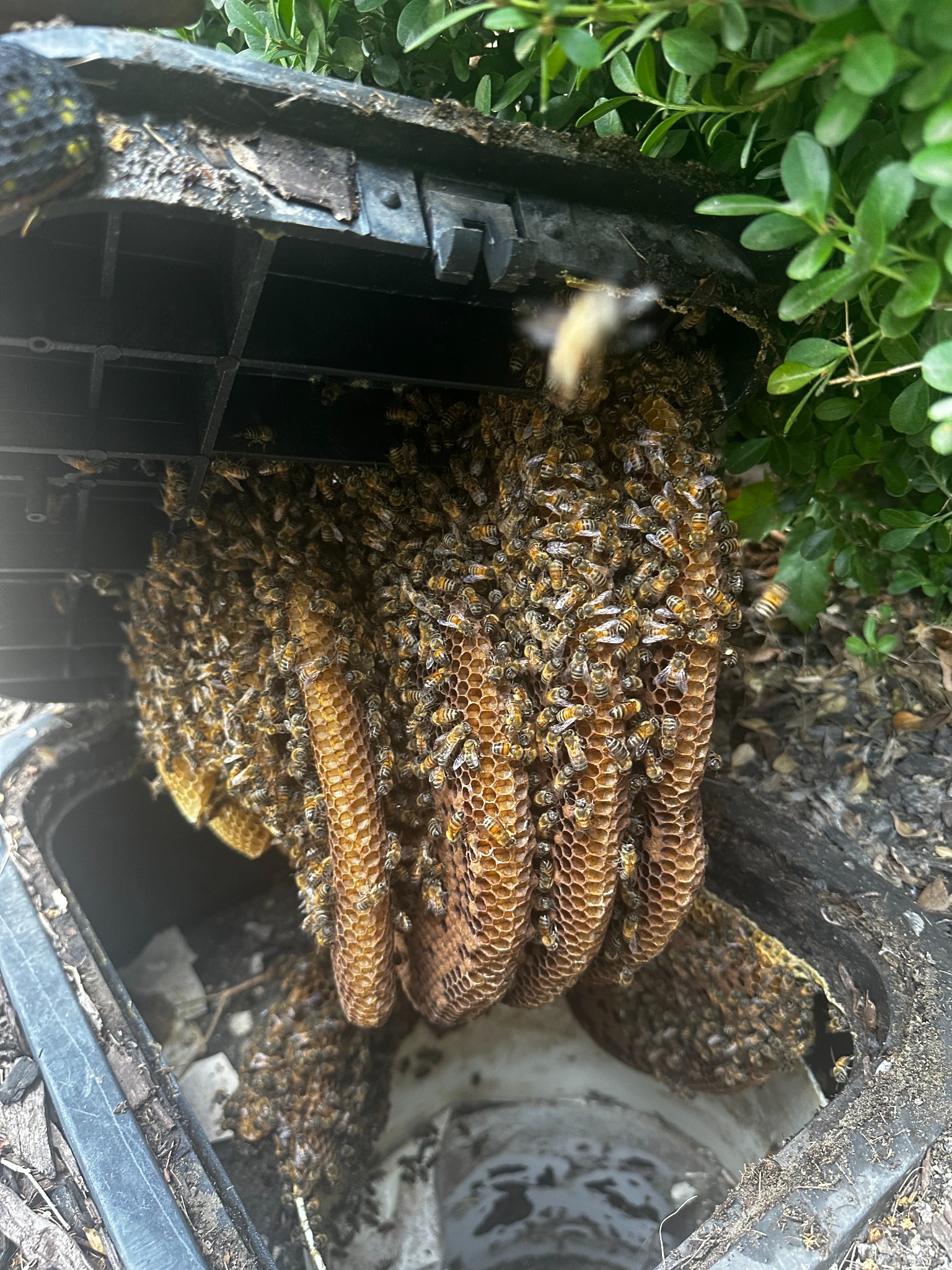
A few bees gathering nectar in the yard is normal. More concerning signs include a continuous flight path to one opening, buzzing within a wall, honey staining, or activity that returns to the same spot every warm day. A visible cluster outside is more likely to be a swarm, especially if no bees are entering a structure.
An accessible swarm that has not entered a structure may be collected and relocated. Timing matters because the cluster may leave or move into a nearby cavity without warning.
Our proprietary repellent approach is designed for particular newer colonies and locations that cannot reasonably be opened. It has a specific process and follow-up timeline, and we will explain when it is appropriate versus when full removal is recommended.
An older structural colony may contain substantial comb, brood, and honey. Full removal allows us to address the entire hive, clean the cavity, fill the void with insulation where appropriate, and reassemble the access area according to the estimate.
Older homes can require a careful access plan that respects original materials and unusual construction. Before work begins, we explain where access is expected, what we can reassemble, and whether a roofer, mason, carpenter, or finish specialist may be needed afterward.
Spraying into an unknown cavity may kill some adult bees while leaving hive material behind. Sealing the opening can push bees deeper into the building. Working from a ladder near a defensive colony also creates an unnecessary fall and sting risk. Photos taken safely from the ground are usually much more useful than disturbing the entrance.
We serve Denton and surrounding North Texas communities including Corinth, Lake Dallas, Lewisville, Little Elm, and Argyle. Visit our Areas We Serve page for additional locations.
Sometimes. Construction materials, access, and preservation concerns vary widely. We plan the removal around the specific building rather than using the same access method for every property.
Yes. Bees may enter at the roofline or an exterior transition and travel into a ceiling or wall cavity before building comb.
They can create odor, staining, leakage, and secondary pest activity. Residual hive material and scent may also make the cavity attractive to future swarms.
When the colony’s condition and removal circumstances allow, we use live-removal and relocation practices. Safety, structural conditions, and colony health determine the final approach.
Send photos showing the entry point, the entire side of the structure, height, and any visible cluster. Tell us how long the activity has been present and whether bees are entering a hole.
Call 972-439-6516 or request a free estimate online. Home & Hive will evaluate the information and explain the safest, most complete option for your property.
Please fill out the form below and we will get back to you shortly.
or call us at:

 info@homeandhive.com
 5.0
5.0
 5.0
5.0