


Honeybees in Gunter may gather temporarily in a tree or move into a protected opening in a home, barn, or other structure. Home & Hive provides professional honeybee removal in Gunter, Texas, with solutions based on whether the bees are a newly arrived swarm or an established colony with comb and honey.
We are a family-owned North Texas company with more than a decade of specialized bee-removal experience. After locating the colony and evaluating access, we may recommend live swarm removal, our Bee Repellent Method, or complete hive removal.
Gunter includes newer homes, rural properties, workshops, barns, mature trees, and structures with many possible entry points. Honeybees need only a small opening to reach a protected cavity, and the visible entrance may be several feet from the main hive.
Common locations include:
These photos show actual Gunter bee-removal projects: a large established colony beneath a floor, a hive concealed inside a soffit, and a temporary honeybee swarm resting in a tree. Each situation requires a different approach, which is why identifying whether bees have built comb is an important first step.
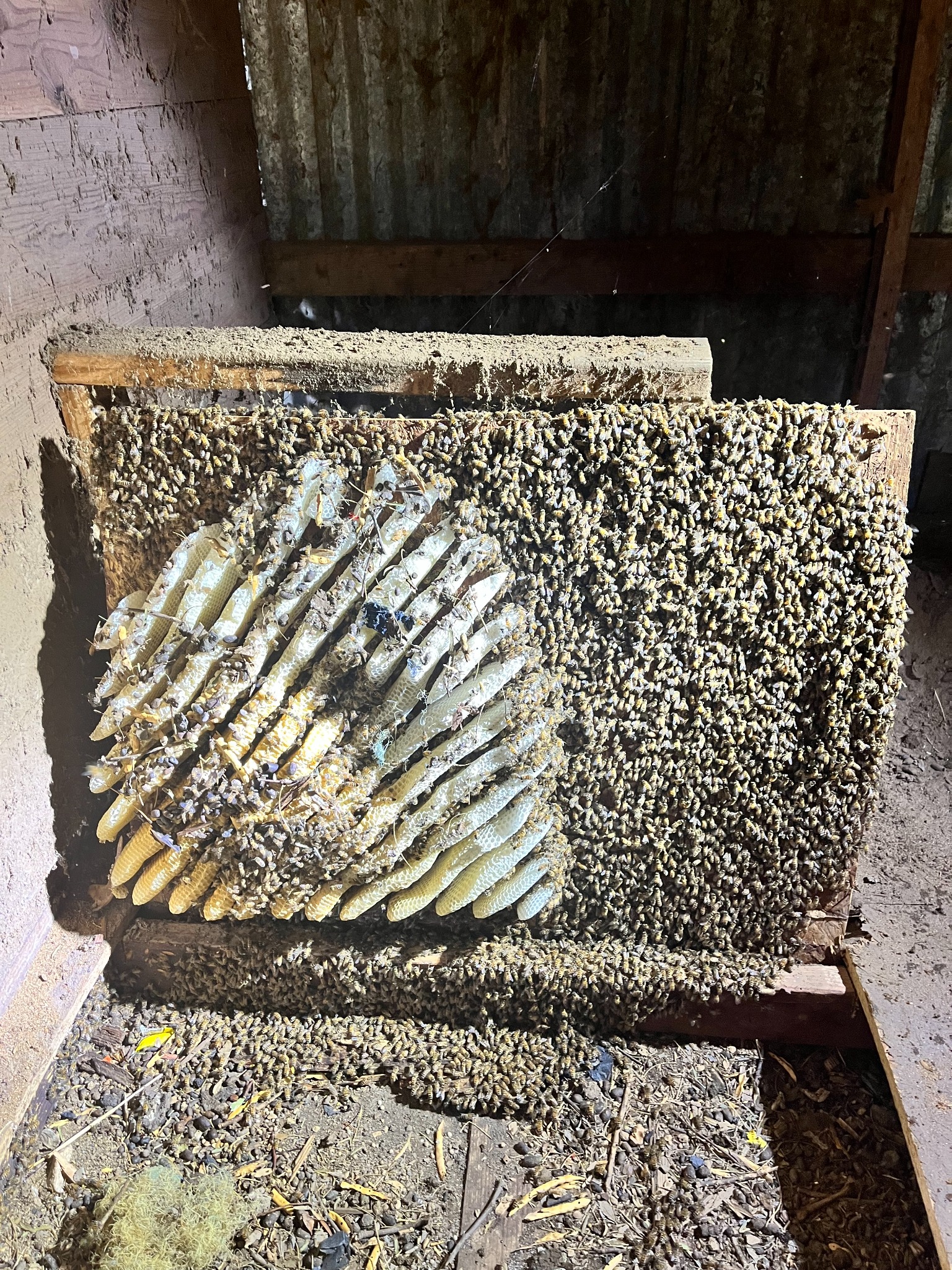
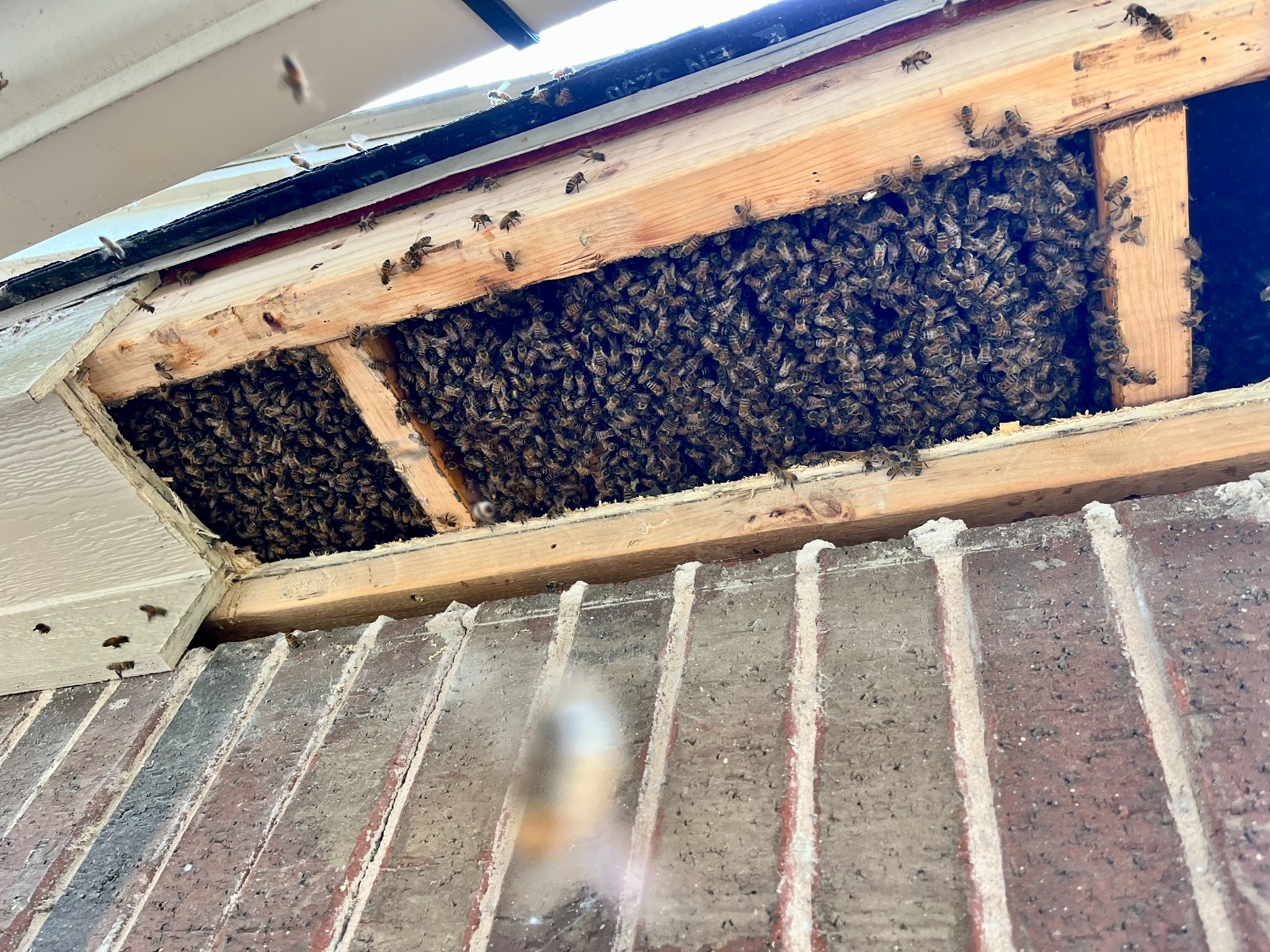
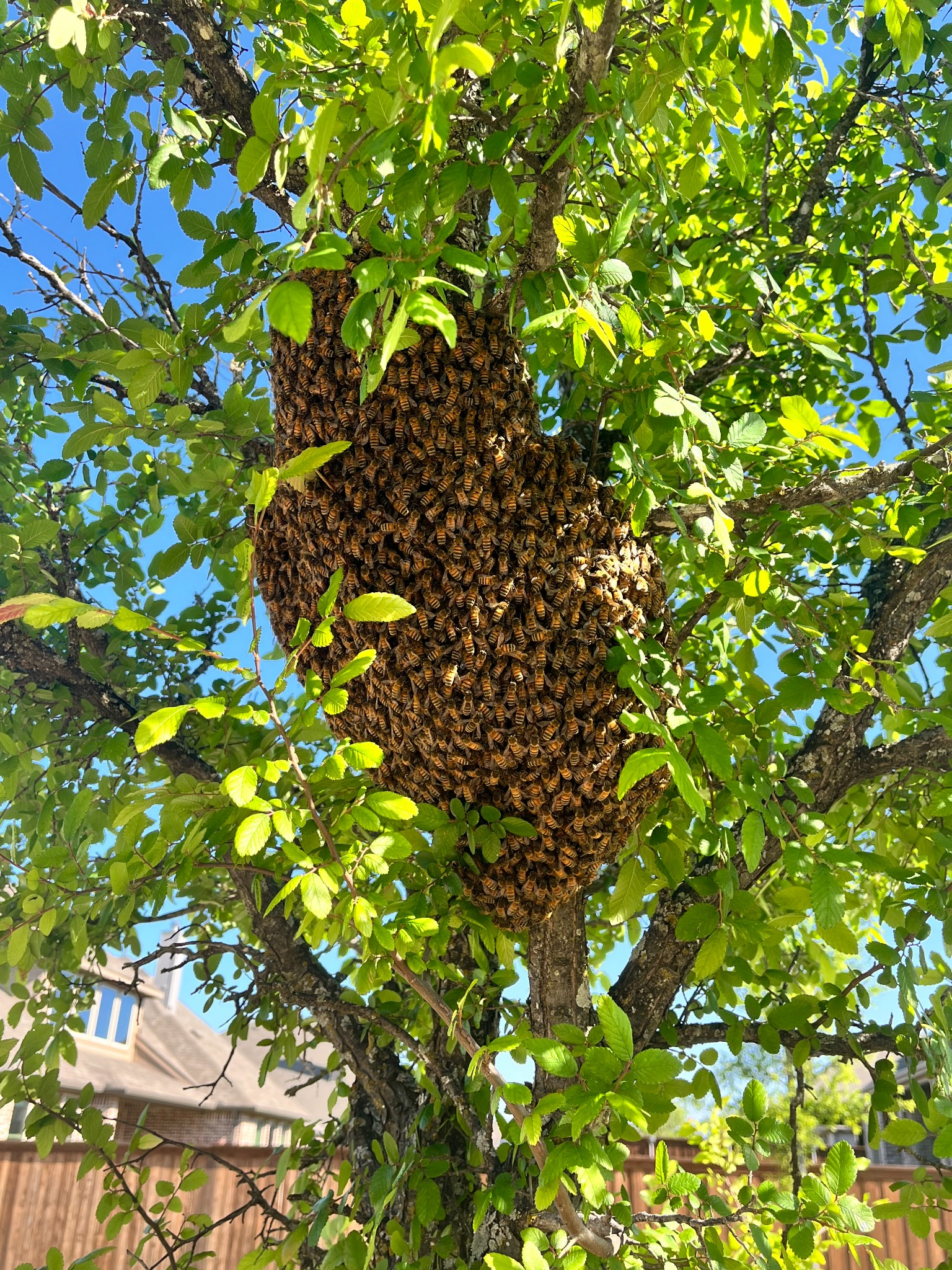
A swarm often appears as a dense cluster of bees hanging from a branch, fence, shrub, or another exposed surface. Swarms are usually resting while scout bees search for a permanent home. Because they have not yet built a hive in the structure, they can often be collected and relocated.
An established hive is different. Bees repeatedly enter and exit the same opening, and the colony builds wax comb inside the cavity. Once comb, brood, and honey are present, removing only the visible bees will not solve the problem. The colony and hive material must be addressed using the method appropriate for the location.
When a swarm is accessible and has not moved into a structure, we can collect the bees and remove them from the property. Prompt service helps reduce the chance that the swarm will choose a nearby wall, soffit, or roof cavity as its permanent home.
For certain newer or inaccessible colonies, our Bee Repellent Method may encourage the bees to leave without opening a large section of the structure. We inspect the location first because the age, strength, and accessibility of the colony determine whether this option is appropriate.
For established structural colonies, complete hive removal may be the best long-term solution. We open the necessary area, remove the bees, comb, brood, and honey, clean and prepare the cavity, add insulation where appropriate, and reassemble the access area as closely as conditions allow.
Abandoned comb and honey can attract ants, wax moths, small hive beetles, rodents, and future bee colonies. Honey may also leak into building materials during hot North Texas weather. A thorough removal addresses the hive material inside the cavity instead of treating only the bees visible at the entrance.
A few bees visiting flowers does not indicate a hive. Consistent traffic into one structural opening is the more important warning sign.
Yes. If bees can access a protected floor cavity, crawlspace edge, or gap in an outbuilding, they may build comb beneath the flooring. The Gunter project shown above demonstrates how large a colony can become when it remains undisturbed.
Yes, when the swarm can be reached safely. A clustered swarm is often temporary, but it is best to have it evaluated before the bees move into a nearby structure.
No. Sealing an active entrance can force bees deeper into the structure or cause them to emerge indoors. The colony should be evaluated and removed or treated appropriately before entry points are closed.
No. The correct method depends on the colony’s age, location, accessibility, and the construction of the property. We explain the available options after assessing the hive.
Yes. We evaluate bee problems in homes, barns, workshops, sheds, and other structures throughout the Gunter area.
If you have a bee swarm or suspect a hive inside your Gunter property, contact Home & Hive for an evaluation. Photos of the entrance or cluster are helpful when determining whether you are seeing a swarm or an established colony.
Contact Home & Hive to request professional honeybee removal in Gunter, Texas.
Please fill out the form below and we will get back to you shortly.
or call us at:

 info@homeandhive.com
 5.0
5.0
 5.0
5.0