


Home & Hive provides professional honeybee removal in Lucas, Texas for swarms, exposed colonies, and established hives inside homes and outdoor structures. Lucas properties often include large homes, acreage, mature trees, play equipment, and detailed rooflines that can give bees many protected places to settle. We identify what the bees are doing, determine where the colony is located, and recommend the right service for the situation.
If you see bees entering a wall, roofline, soffit, floor, or play structure, avoid sealing the opening or spraying the entrance. A hidden colony can contain bees, brood, honey, and many sheets of comb. Closing the visible gap before the colony is addressed may push bees farther into the building or leave hive material behind.
We handle both temporary swarms and established honeybee colonies. A swarm is usually a cluster of bees resting while scouts look for a new home. When there is no comb, our swarm removal service may be appropriate. When bees have built comb inside a structure or on outdoor equipment, a full hive removal is generally the better solution.
For accessible structural colonies, we carefully open the affected area, remove the bees and accessible comb, and prepare the cavity for repair and exclusion. When conditions allow, the colony can be relocated. We also offer a bee repellent method for qualifying situations where full removal is not the right fit.
These photographs show the variety of hive locations we encounter in Lucas. Every job begins with an evaluation because an interior wall colony requires a different access plan than a hive built on playground equipment.
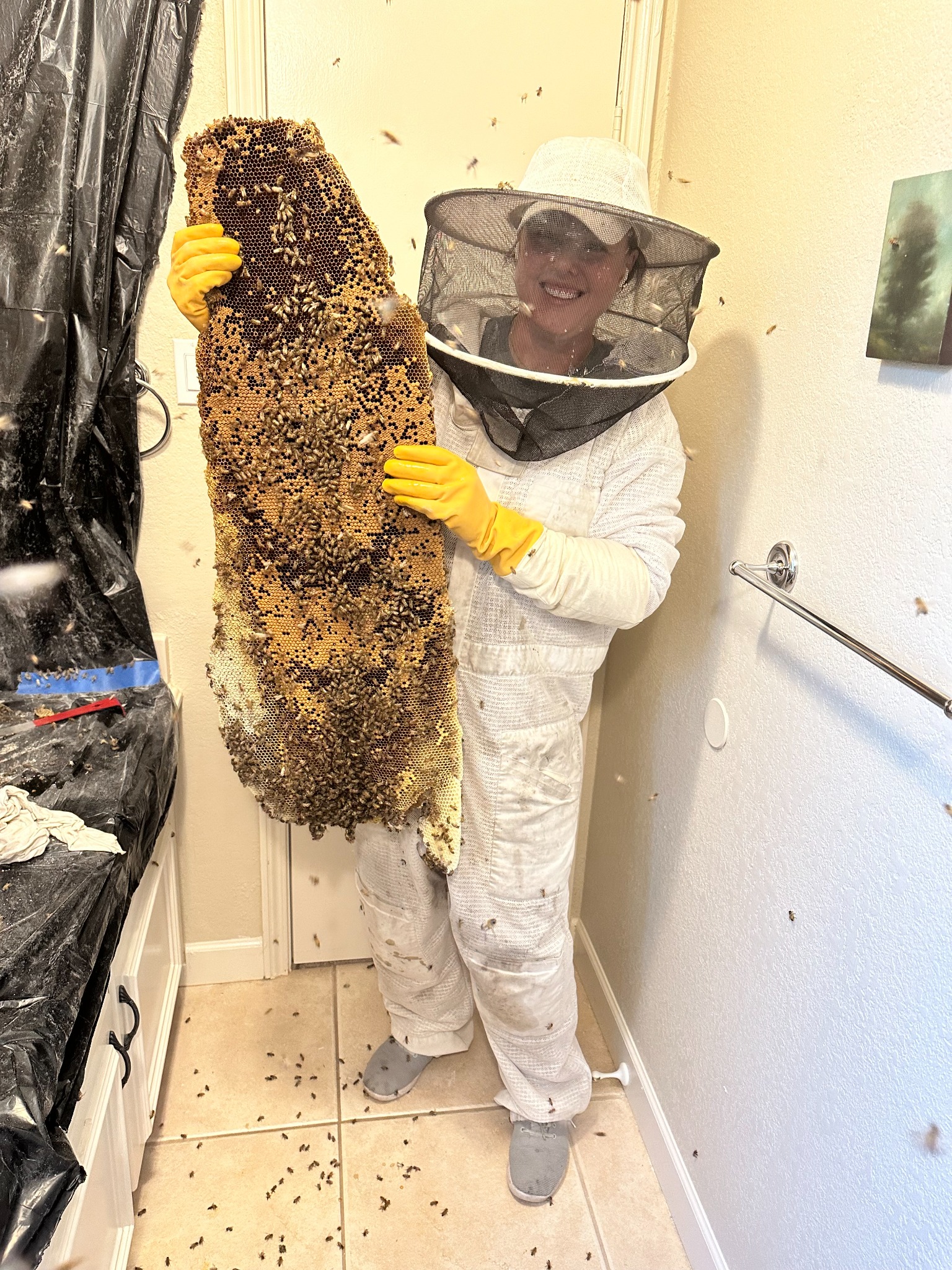
Interior removals require careful containment and a clear access plan. The large sheet of comb shown above came from a colony established inside a Lucas home. We protect the work area, remove accessible bees and hive material, and help the property owner understand what must be repaired after the cavity is cleared.
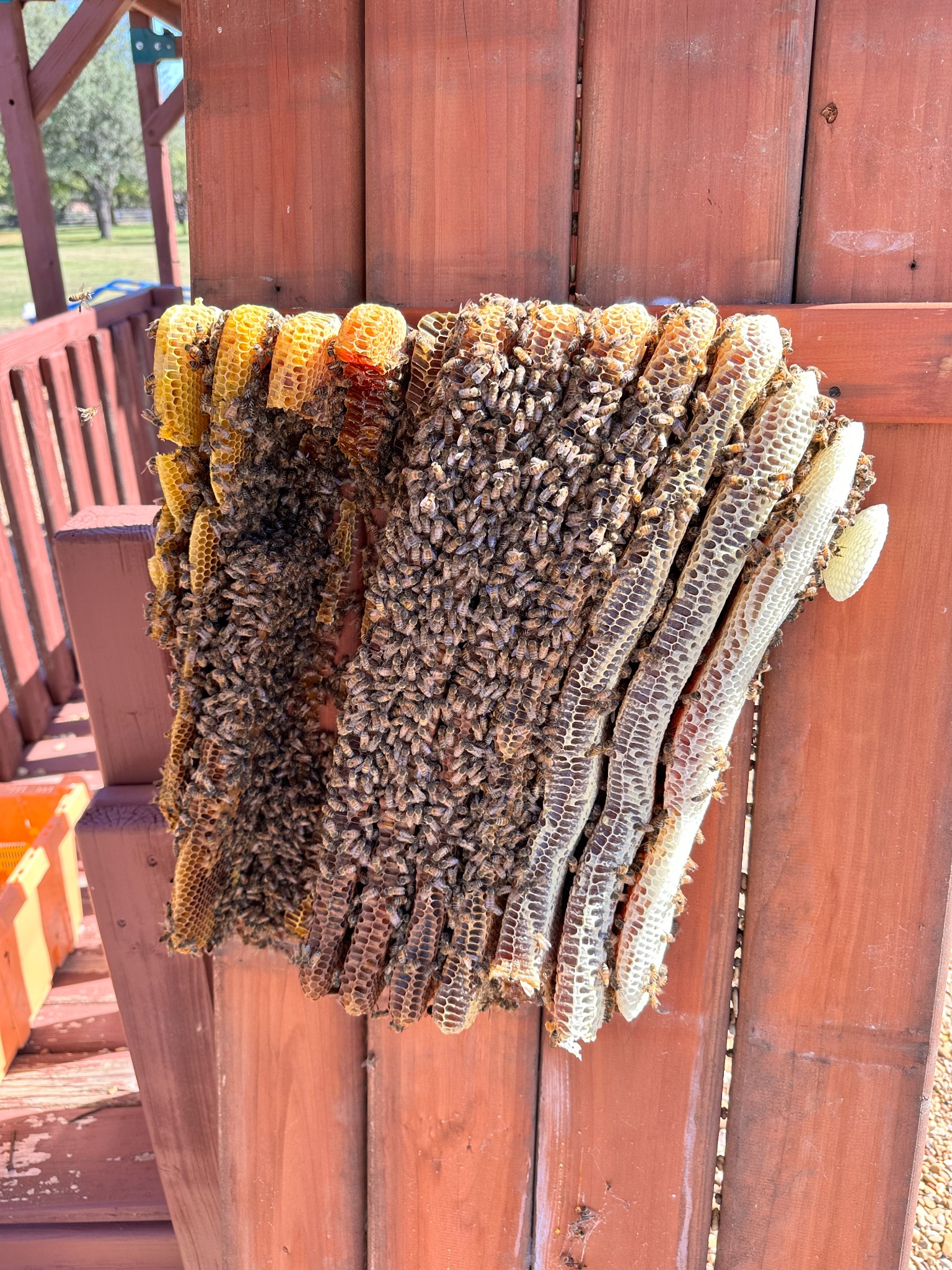
Play structures, benches, sheds, and other wooden features can shelter a colony from weather. Keep children and pets away from active bee traffic and do not disturb the structure. The Lucas playground hive above contained extensive comb and required removal rather than simple swarm collection.
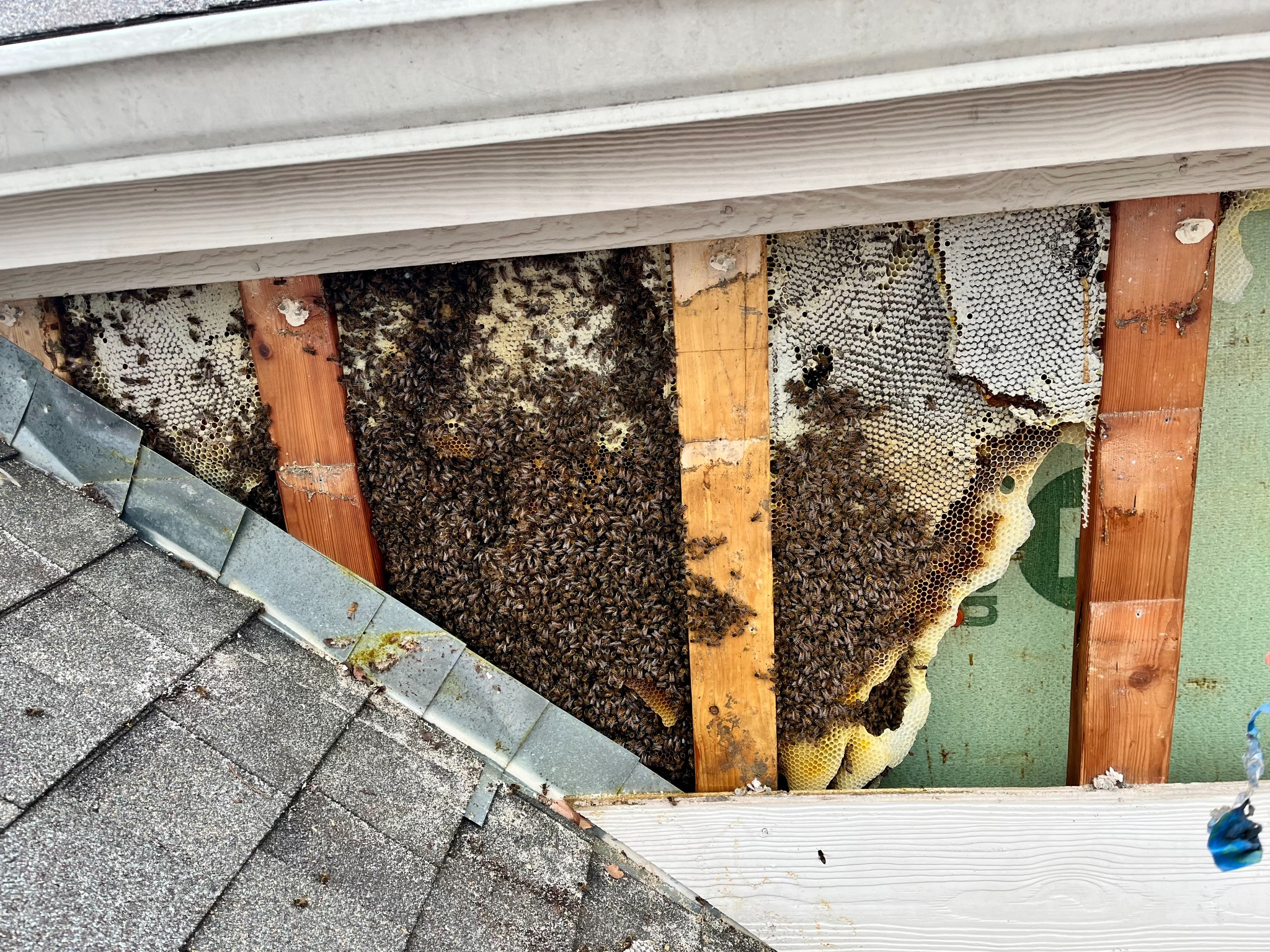
A steady stream of bees using one gap in siding, brick, trim, or a roofline often indicates an established colony. Once comb is present, treating only the entrance will not remove honey, brood, or wax. Full access allows us to address the hive material and reduce the chance of leakage, odors, secondary pests, or another swarm being attracted to the same cavity.
Bees gathering pollen from flowers are normal. The concern is concentrated traffic into a structure or visible comb in a place where people regularly pass.
Containment is part of the work plan when access is made from indoors. The exact approach depends on the hive location and building layout, so we explain preparation steps before the appointment.
No. Keep children and pets away until the colony has been evaluated and removed. Vibration or contact with the structure can trigger defensive behavior.
A swarm is usually a temporary cluster without comb. An established hive has wax comb, brood, stored honey, and regular flight traffic. Photos or a short video from a safe distance can help us identify the situation.
During a full hive removal, we remove accessible bees, comb, brood, and honey from the opened area. Removing hive material is important because abandoned honey and wax can leak or attract pests and future swarms.
Do not seal an active entrance. Trapped bees may move deeper into the structure or find a route indoors. The colony should be addressed before entry points are closed.
If you have a swarm, an interior hive, or bees entering a wall, soffit, roofline, playground, or other structure in Lucas, contact Home & Hive. Clear photos of the bees and entry point are helpful when determining the correct service.
Contact Home & Hive to request professional honeybee removal in Lucas, Texas.
Please fill out the form below and we will get back to you shortly.
or call us at:

 info@homeandhive.com
 5.0
5.0
 5.0
5.0