


Home & Hive provides professional honeybee removal in Richardson, Texas for swarms, exposed tree colonies, and established hives inside homes and other structures. Richardson’s established neighborhoods, mature trees, older construction, and varied rooflines can offer bees both temporary resting places and protected cavities for permanent colonies.
A cluster on a branch may be a swarm, while steady traffic through a roof, wall, or joist opening often points to an established hive. Correct identification matters because a swarm without comb is handled differently from a colony containing brood, honey, and wax. We evaluate the location and recommend a service based on what is actually present.
Our swarm removal service is designed for temporary clusters that have not yet built comb. When bees are established inside a wall, joist bay, roofline, or tree cavity, a full hive removal is usually needed to address both the bees and accessible hive material.
For accessible structural colonies, we open the affected area, remove the bees and accessible comb, and prepare the cavity for repair and exclusion. A bee repellent method may be available for qualifying situations. The right approach depends on the colony’s location, access, size, and stage of development.
These projects illustrate three very different situations: a resting swarm, a hidden structural hive, and an established exposed hive in a tree.
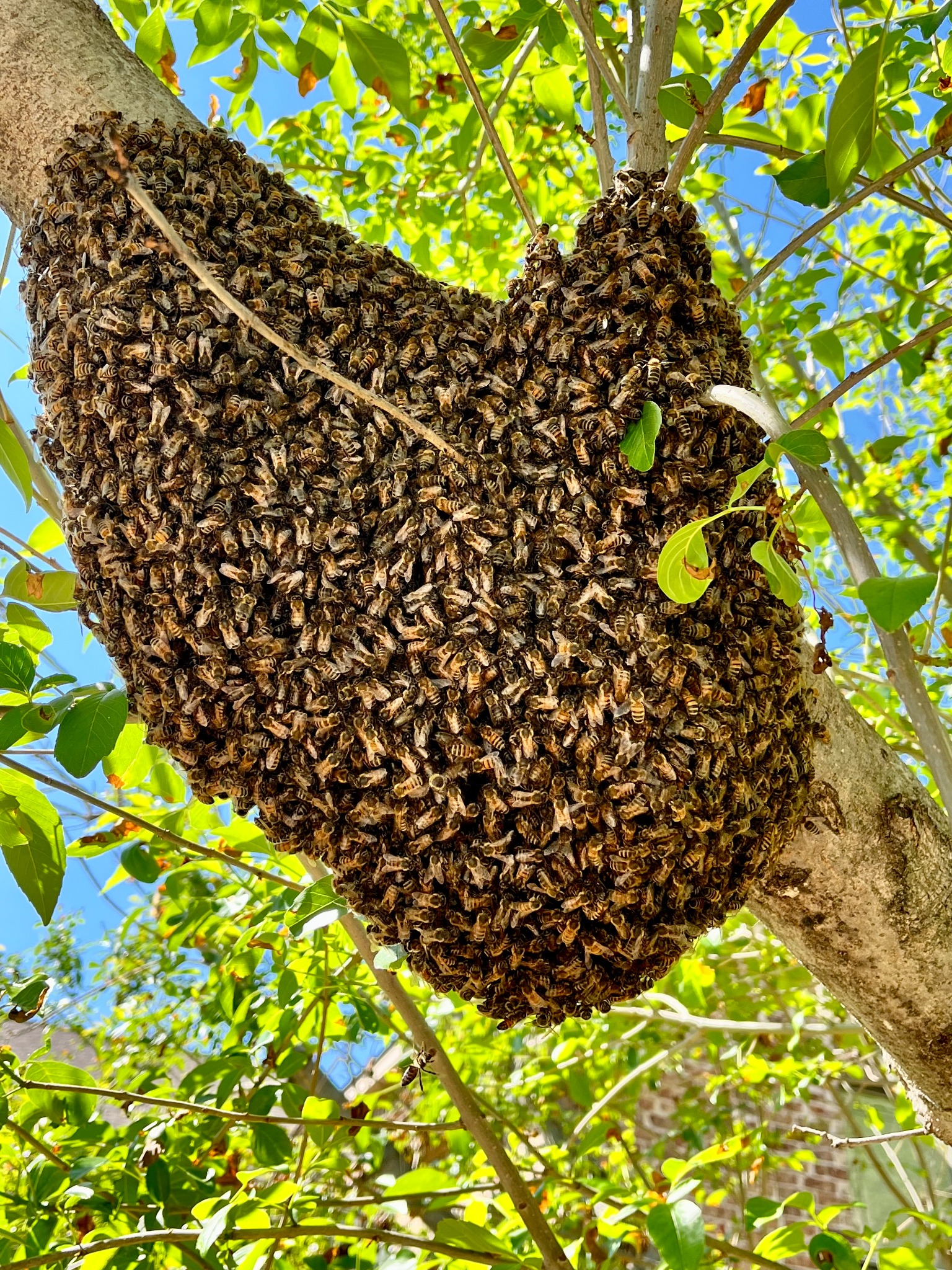
A swarm can look dramatic, but it is usually a temporary stop while scout bees search for a new nesting site. Early collection can prevent the group from moving into a chimney, soffit, wall, or shed. Do not shake the branch, spray the cluster, or stand directly beneath it.
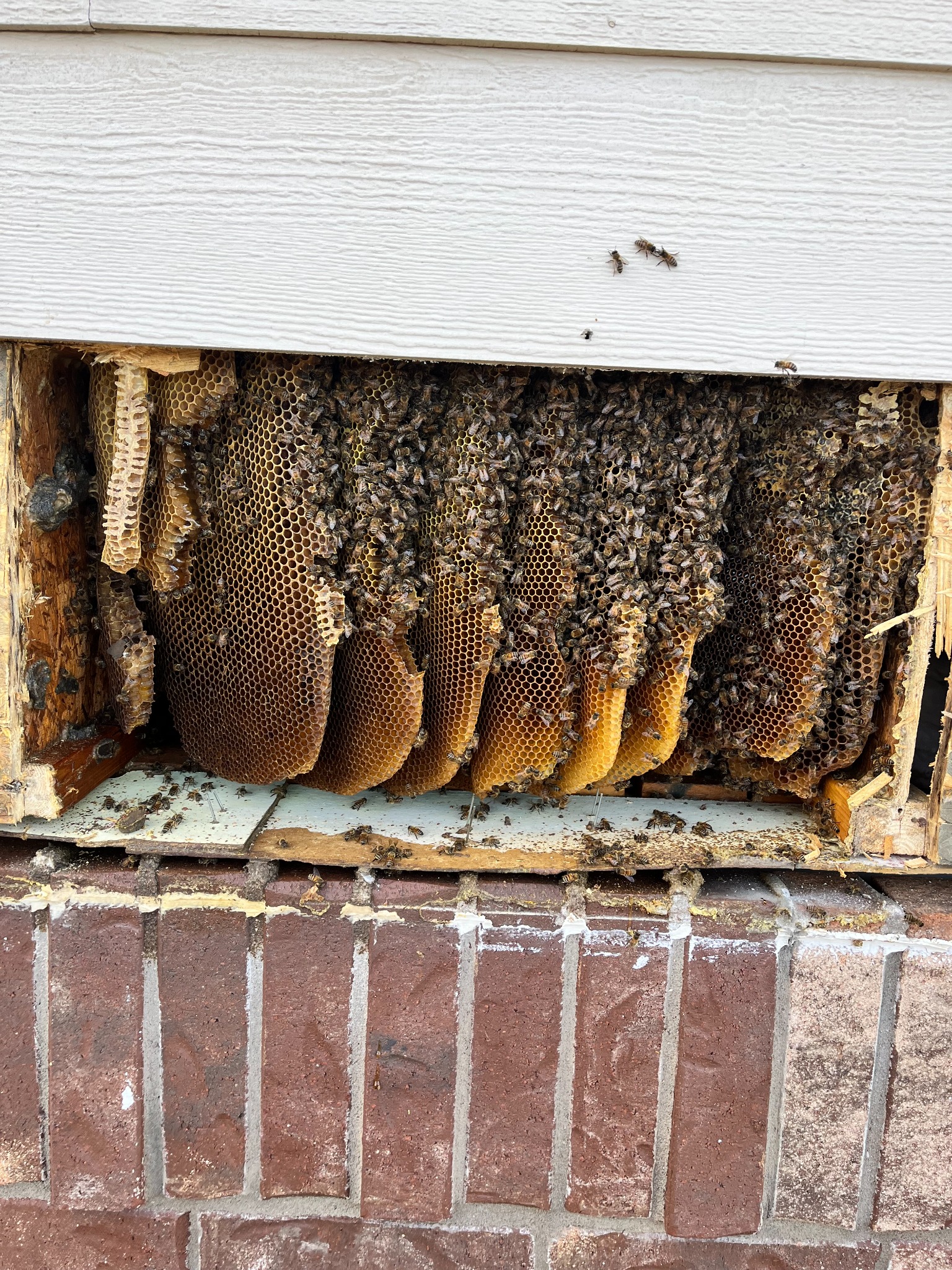
Joist spaces can hold a surprisingly large colony while only a small entrance is visible outdoors. Bees may build across multiple framing bays, and the comb can contain brood and heavy stores of honey. Proper access makes it possible to remove accessible hive material rather than simply blocking the entrance.
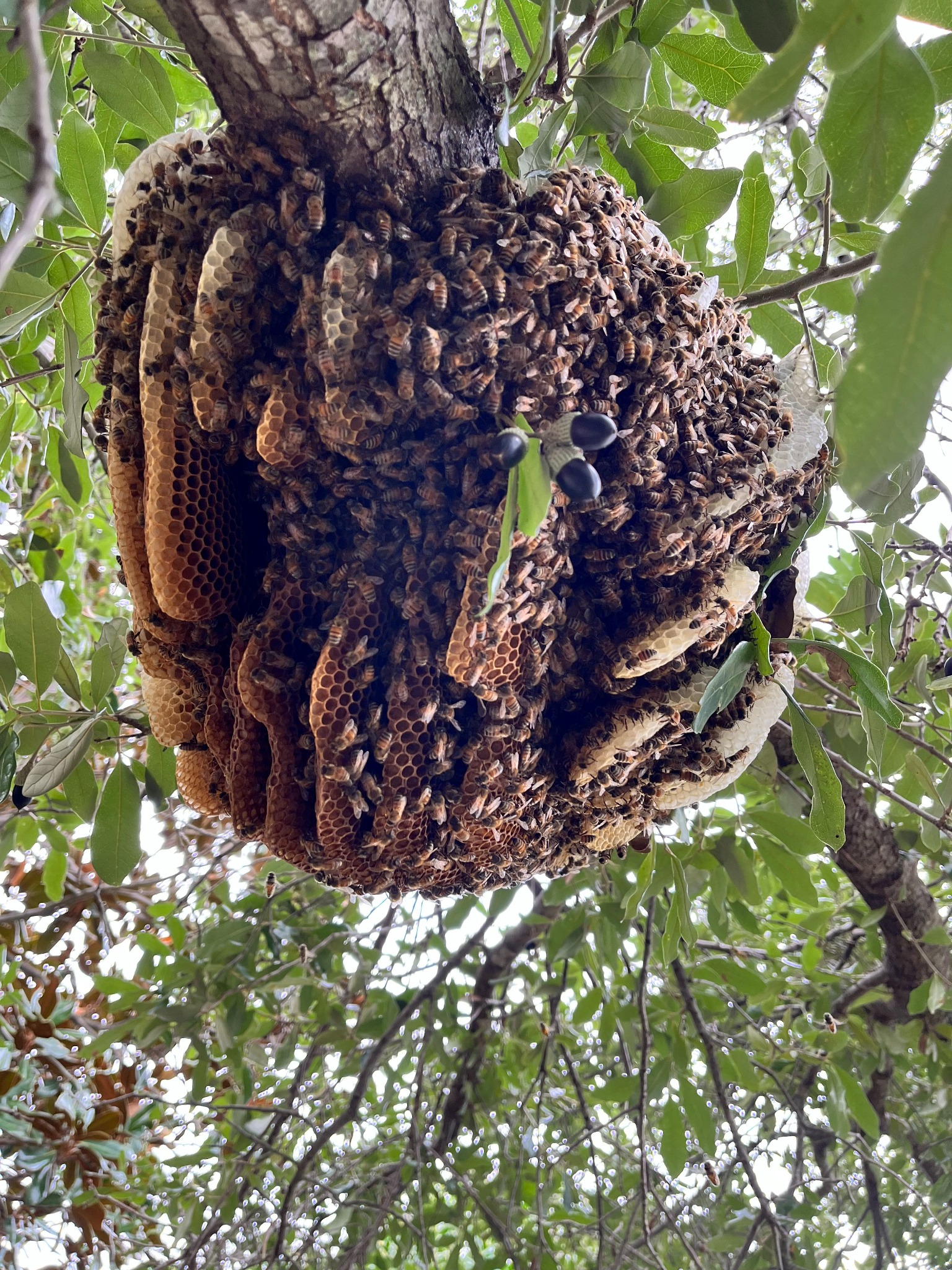
Not every cluster in a tree is a swarm. The Richardson colony above had built substantial exposed comb, making it an established hive. Tree colonies may require removal when they are close to homes, sidewalks, children, pets, or regular yard activity. Visible wax, brood, and honey distinguish an established hive from a temporary swarm.
Sealing the gap while bees are still inside can force them deeper into a wall or toward the living space. It also leaves comb, honey, and brood behind. Abandoned hive material may leak, create odors, attract pests, or draw another swarm. The colony should be addressed before the access point is repaired.
For identification, take photographs from a safe distance and use zoom. Honeybees are generally fuzzy and brown-gold, while many yellow jackets have smoother bodies with brighter yellow-and-black markings.
A swarm may remain for only a few hours or for several days. It can leave at any time once scout bees select a nesting site, so prompt evaluation is helpful.
Yes. Bees can build through available gaps and fill a large protected cavity. The outside entrance does not reveal the full size of the colony.
No. A swarm is a temporary cluster without established comb. An exposed hive has wax comb, brood, and stored food and requires a fuller removal process.
During a full hive removal, we remove accessible comb, brood, honey, and bees from the opened area. This reduces the problems associated with leaving hive material behind.
Proper removal, cleanup, repair, and exclusion reduce the chance of recurrence at that opening. Because other gaps may exist, the surrounding structure should also be evaluated for likely entry points.
If you have a swarm in a tree, bees entering a joist or wall cavity, or an exposed hive on your Richardson property, contact Home & Hive. Photos of the insects, comb, and entry point help us recommend the right service.
Contact Home & Hive to request professional honeybee removal in Richardson, Texas.
Please fill out the form below and we will get back to you shortly.
or call us at:

 info@homeandhive.com
 5.0
5.0
 5.0
5.0