


Honeybees in Anna may build exposed comb in a tree, establish a large colony inside a soffit, or settle beneath an outdoor play structure. Home & Hive provides professional honeybee removal in Anna, Texas, with solutions based on the colony’s location, age, accessibility, and amount of comb present.
We are a family-owned North Texas company with more than a decade of specialized bee-removal experience. After evaluating the activity, we may recommend live swarm removal, our Bee Repellent Method, or complete hive removal.
Anna’s mix of newer neighborhoods, rural acreage, mature trees, and outdoor structures gives honeybees many possible nesting sites. A colony can use a narrow construction gap to reach a much larger protected void, so the visible entrance does not always reveal the full size of the hive.
Locations we commonly evaluate include:
These photos show actual Anna bee-removal projects: an exposed hive with comb in a tree, a large established colony hidden inside a soffit, and a hive built beneath a wooden play structure. These examples show why the safest and most effective solution depends on both the location and the amount of established hive material.
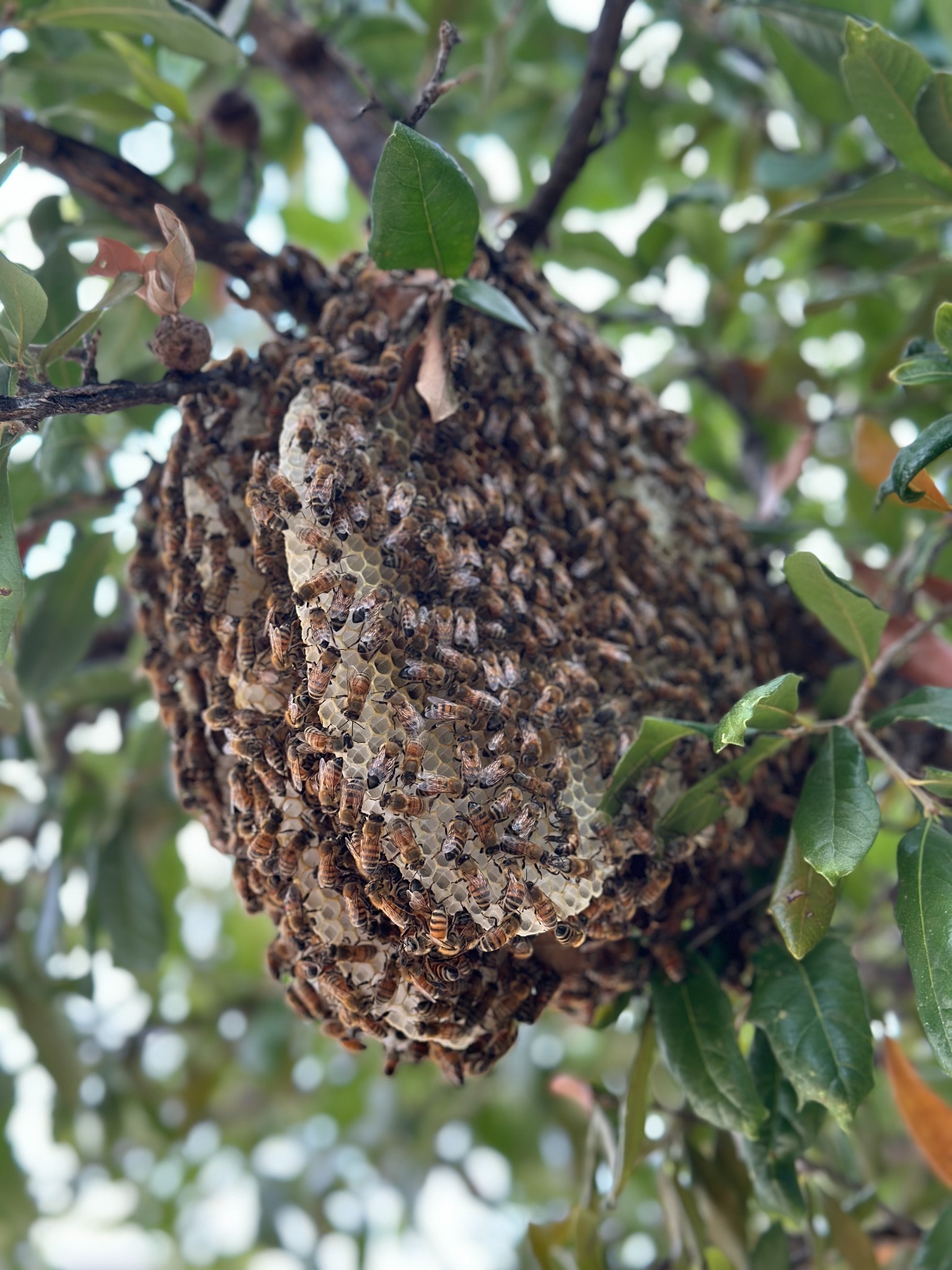
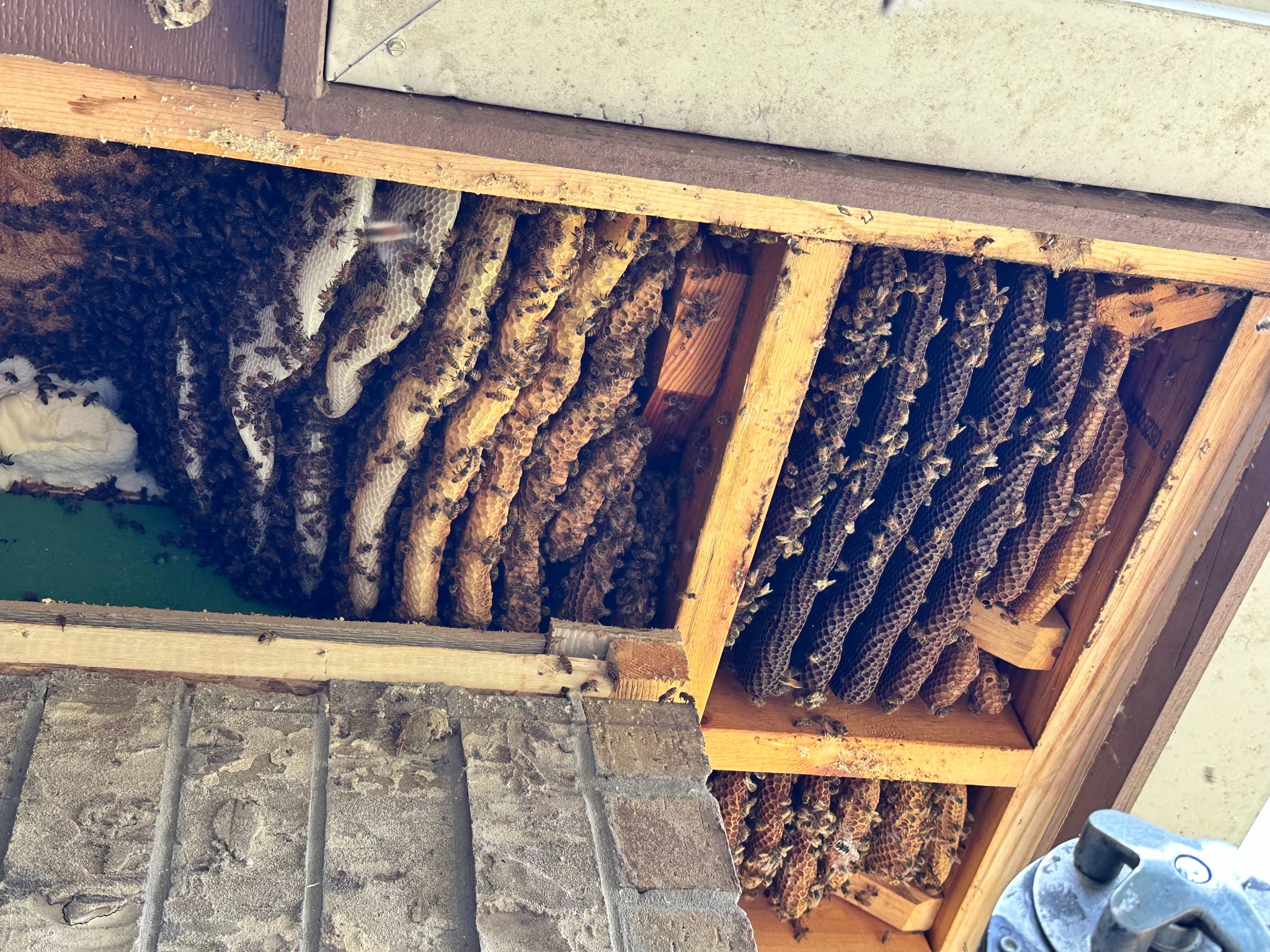
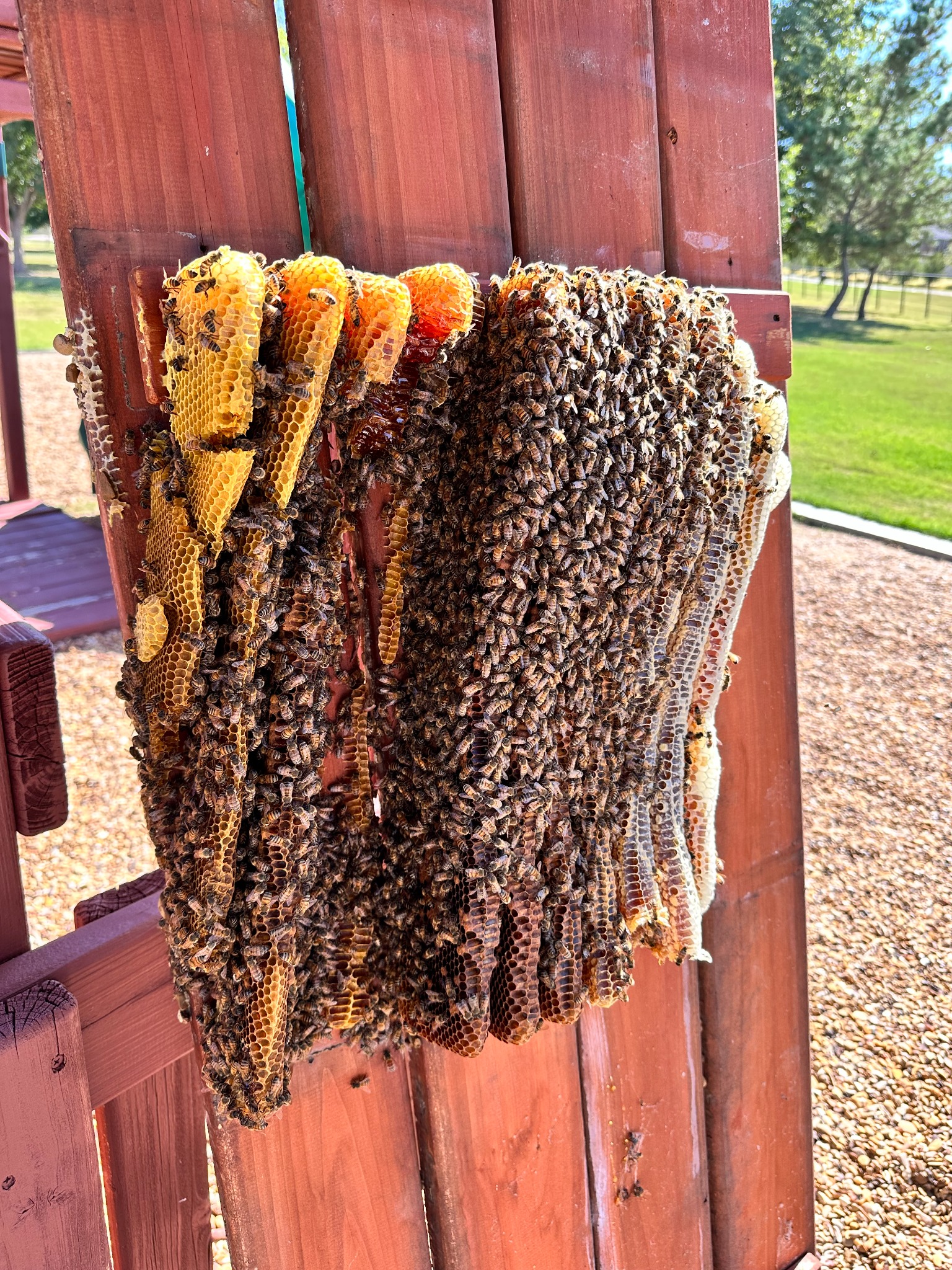
A temporary swarm usually looks like a dense ball of bees with little or no visible comb. The cluster may remain for a few hours or several days while scout bees search for a permanent location. When accessible, a swarm can often be collected and relocated before it moves into a nearby structure.
An exposed tree hive has visible wax comb and is already an established colony. Because the bees are raising brood and storing honey, the removal must address the comb as well as the bees. The first Anna photo above is an established exposed hive, not simply a resting swarm.
When bees are clustered temporarily on a tree, shrub, fence, or other accessible surface without established comb, we can collect the swarm and remove it from the property.
For certain newer or difficult-to-access colonies, our Bee Repellent Method may be an option. We inspect the site first because colony age, strength, location, and construction conditions determine whether repellent treatment is appropriate.
Established hives in soffits, walls, play structures, and other accessible locations often require complete removal. We open the necessary area, remove the bees, comb, brood, and honey, clean and prepare the cavity, add insulation where appropriate, and reassemble the access area as closely as conditions allow.
Play structures contain protected spaces that can shelter a growing colony while placing bee traffic close to children and frequently used outdoor areas. If bees are repeatedly entering beneath a platform, roof, bench, or enclosed wooden section, avoid disturbing the structure and keep people and pets away until the location can be evaluated.
Spraying the visible bees or blocking their entrance does not remove the colony. It may increase defensive behavior or force bees into a different part of the structure.
When an established hive is removed, leaving comb behind can create future problems. Wax, brood, and honey may attract ants, wax moths, small hive beetles, rodents, and new swarms. Honey can also soften and leak during hot North Texas weather. A complete removal addresses the hive material inside the space rather than only the activity visible outside.
Bees gathering pollen from flowers are normal. A steady stream of bees using one structural opening is the more important sign of a hidden colony.
Yes. We evaluate whether the bees are a temporary swarm, an exposed hive with comb, or a colony living inside a hollow tree. Each situation requires a different removal approach.
Yes. Platforms, roofs, benches, and enclosed wooden cavities can provide shelter for an established colony. Keep children and pets away and avoid moving or striking the structure until it has been inspected.
No. Sealing an active entrance can trap bees inside or redirect them into the home. The colony should be evaluated and properly removed or treated before entry points are closed.
During complete hive removal, we remove accessible bees, comb, brood, and honey from the cavity. This helps reduce odors, leakage, pest activity, and the chance that future swarms will be attracted to the same hive material.
We consider whether comb is present, how long the bees have been active, the size and strength of the colony, and whether the nesting area can be safely accessed.
If you have a honeybee swarm, an exposed tree hive, or bees entering an Anna home or outdoor structure, contact Home & Hive for an evaluation. Sending photos of the cluster or entrance can help us determine what type of bee activity you are seeing.
Contact Home & Hive to request professional honeybee removal in Anna, Texas.
Please fill out the form below and we will get back to you shortly.
or call us at:

 info@homeandhive.com
 5.0
5.0
 5.0
5.0