


Honeybees can establish colonies in surprisingly small openings around Aubrey homes, fences, rooflines, valve boxes, barns, and other outdoor structures. Home & Hive provides professional honeybee removal throughout Aubrey, Texas, with solutions based on whether the bees are a temporary swarm, a newly established colony, or a mature hive containing comb, brood, and stored honey.
Our team specializes in identifying the colony’s exact location and recommending the least disruptive effective service. Depending on the situation, that may include swarm removal, our bee repellent method, or a full hive removal that opens the cavity and removes accessible bees, comb, brood, and honey.
Aubrey includes newer subdivisions, established neighborhoods, acreage properties, barns, workshops, and equestrian facilities. That variety gives honeybees many protected spaces to occupy. We frequently find colonies in roof and soffit cavities, exterior walls, fence columns, irrigation or water-valve boxes, outbuildings, and sheltered areas beneath decks or equipment.
A cluster resting openly on a tree, fence, or structure may be a swarm that has not yet built comb. Bees repeatedly entering the same opening usually indicate a colony inside a cavity. Avoid sealing an active entrance because trapped bees may move deeper into the structure or emerge indoors.
These photographs show three different Aubrey removals and demonstrate why the location and maturity of each colony matter when choosing a service.
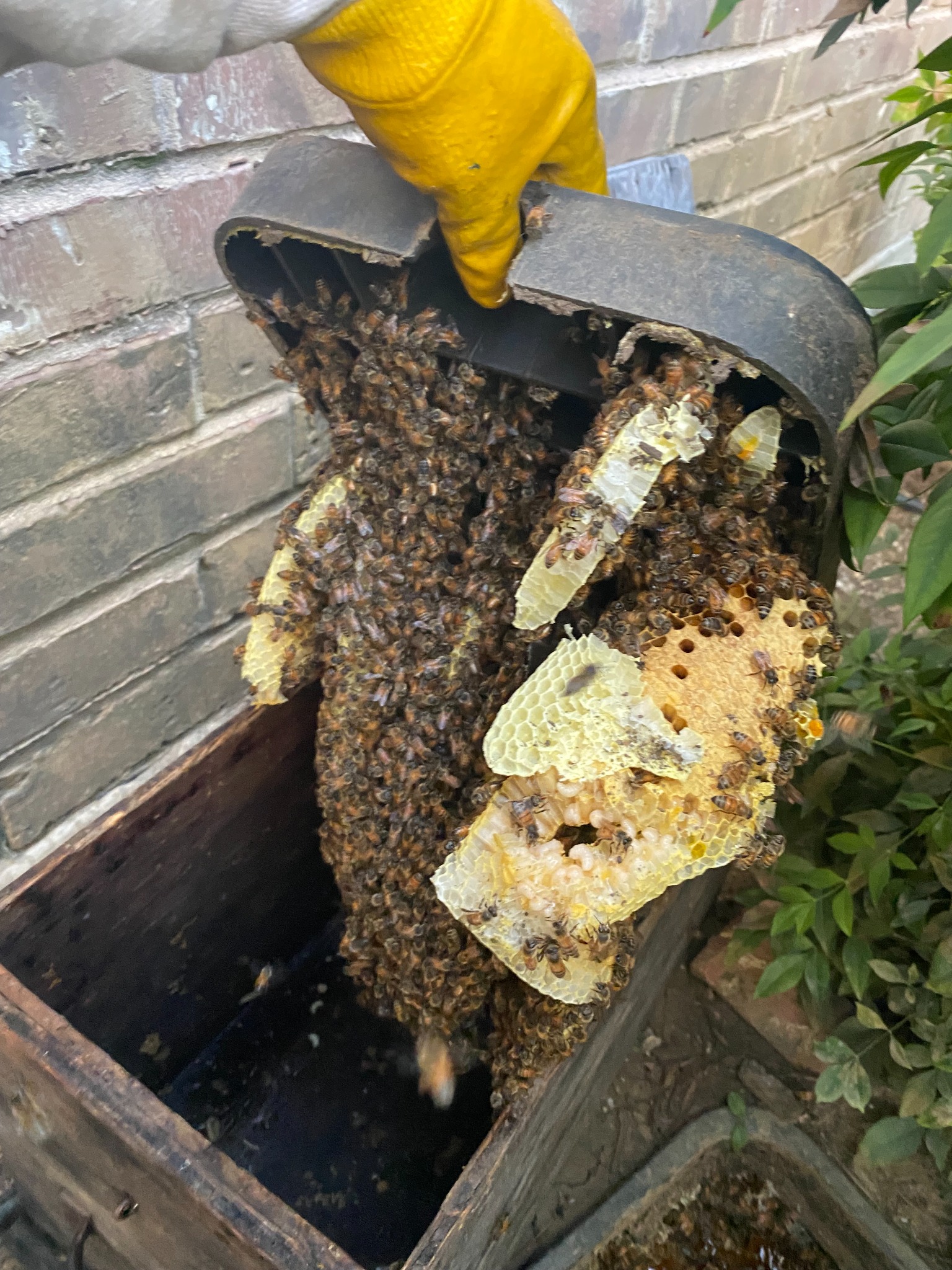
Valve and irrigation boxes provide shade, protection, and a ready-made cavity. Because technicians and homeowners may need access to the equipment, the hive should be addressed before anyone reaches inside. Simply spraying the entrance or replacing the lid does not remove the comb inside.
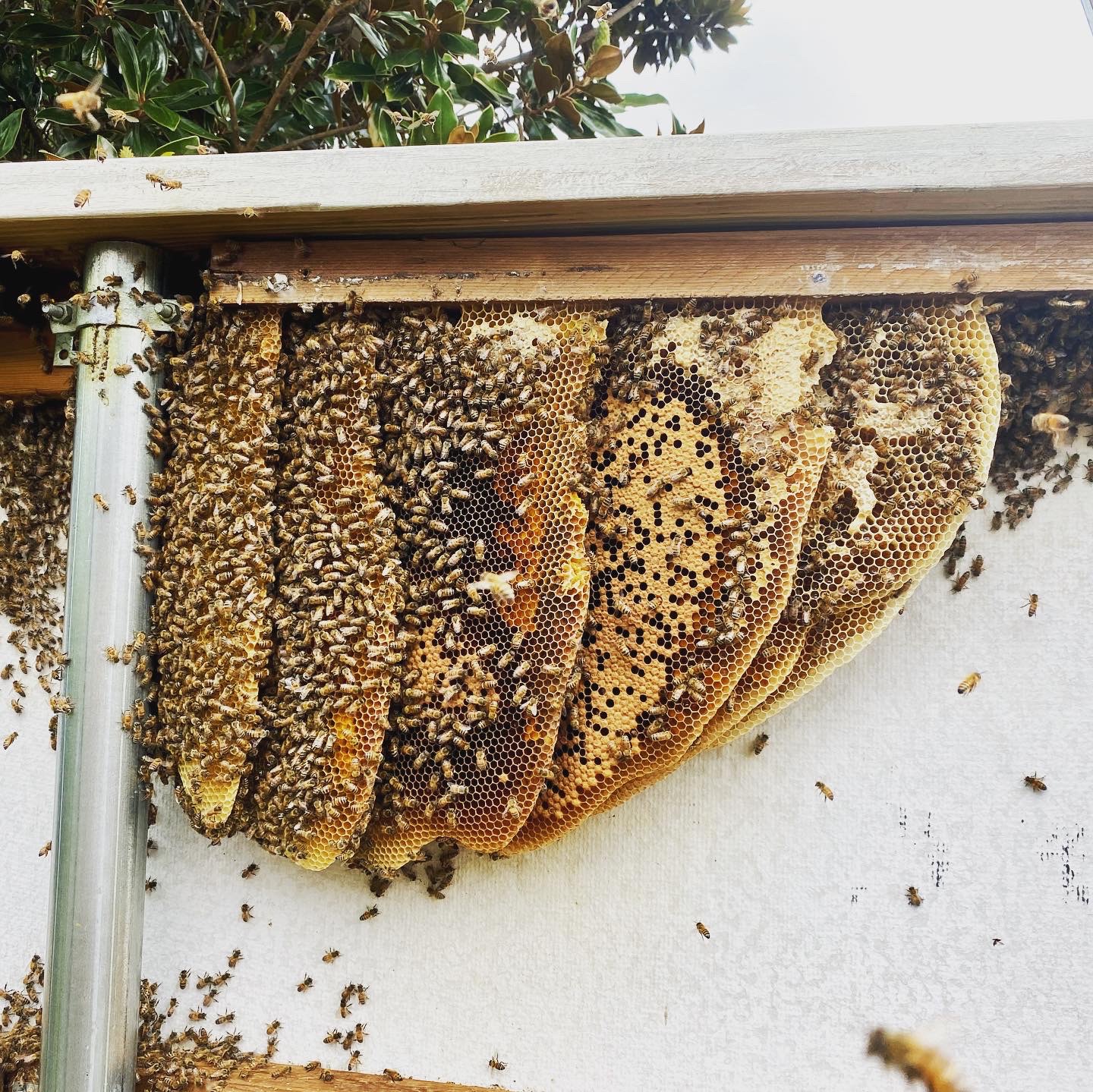
Hollow fence sections and columns can conceal a substantial colony. Bees may enter through a narrow seam while building many layers of comb inside. When the cavity can be opened, removing the hive material helps prevent honey leakage, odors, wax-moth or beetle activity, and attraction for future swarms.
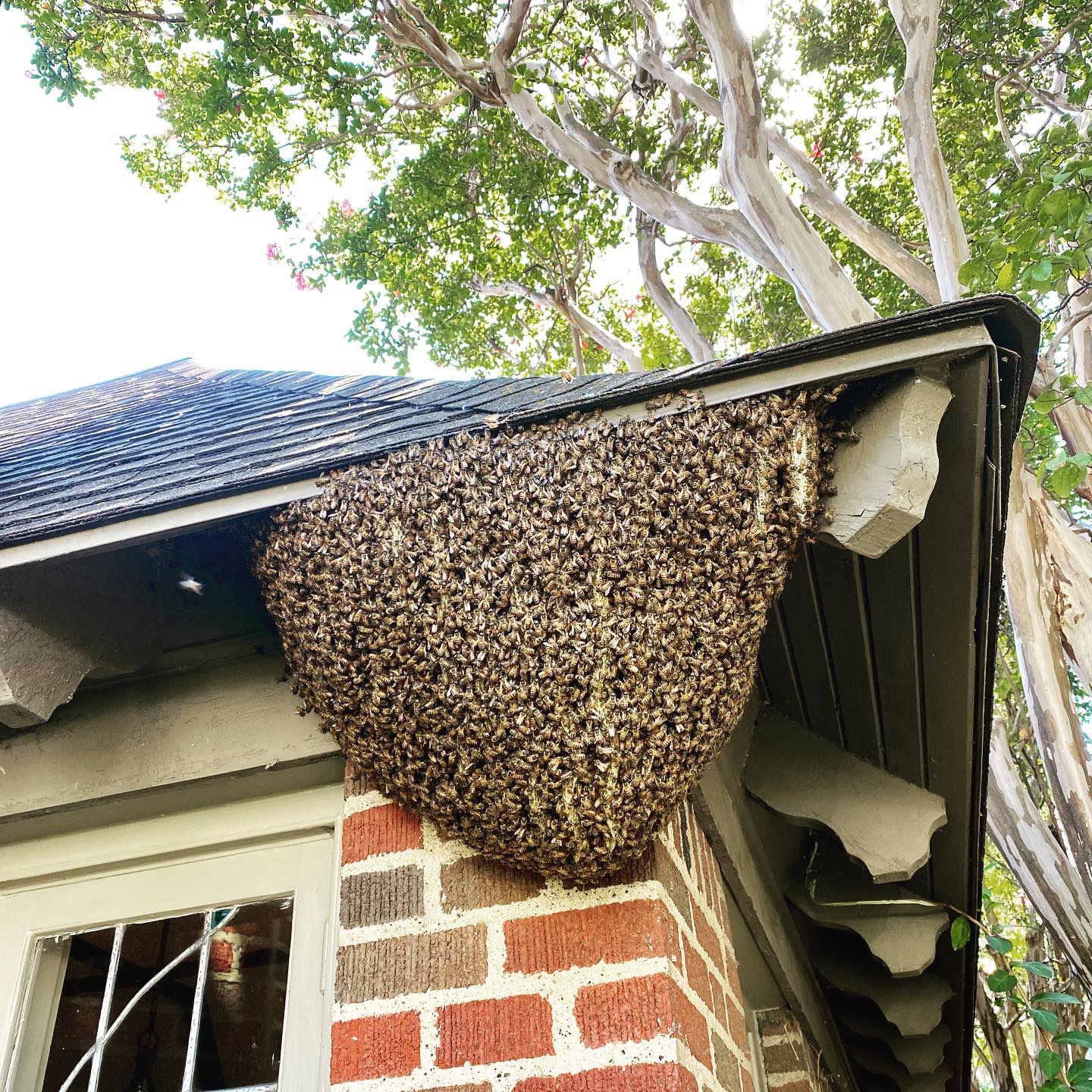
Roofline colonies can begin behind trim, at a soffit gap, or near the junction of brick and wood. Activity outside may look modest even when the protected cavity contains a mature hive. We trace the entrance and evaluate the construction before recommending access.
A newly arrived swarm is usually a dense cluster of bees without established comb. When it is accessible, we can collect and relocate the bees before they move into a wall or roof cavity.
For certain new or inaccessible colonies, our repellent method may encourage the bees to leave the cavity. This is not appropriate for every hive, especially when substantial comb and honey are already present, so we evaluate the colony first.
For established structural colonies, full removal provides access to the hive so accessible bees, wax, brood, and honey can be removed. The opened area is cleaned, the void is packed as appropriate, and exterior entry points are addressed according to the construction and agreed scope.
A honeybee colony is more than the bees visible at the entrance. Inside are wax combs that may contain brood, pollen, and honey. If a mature colony dies or leaves while the material remains, honey can leak, wax can soften, and secondary pests may enter. Old hive scent can also attract future swarms. Removing accessible hive material and addressing the cavity gives the property a more complete solution.
Observe from a safe distance and send photos or a short video when possible. Do not open an electrical, irrigation, or water-valve box if bees are entering it.
Yes. When the hive location and conditions allow, we remove and relocate honeybees. The recommended method depends on accessibility, colony age, construction, and safety.
Yes. These boxes are common nesting sites. Keep the lid closed and avoid reaching inside until the colony has been evaluated.
No. Sealing an active entrance can trap bees or redirect them farther into a structure. Removal or treatment should come first, followed by appropriate exclusion work.
A swarm is usually a temporary cluster with no comb. An established hive has repeated entrance activity and may contain visible wax, brood, and honey. We can often make an initial determination from clear photos and activity details.
Yes. We service residential and rural Aubrey properties and regularly evaluate colonies in fences, outbuildings, rooflines, and other structures.
If you see honeybees entering a valve box, fence, roofline, wall, barn, or other cavity, contact Home & Hive before the colony grows. Include photos of the entrance and surrounding structure when possible so we can recommend the appropriate next step.
Contact Home & Hive to request professional honeybee removal in Aubrey, Texas.
Please fill out the form below and we will get back to you shortly.
or call us at:

 info@homeandhive.com
 5.0
5.0
 5.0
5.0