


When bees begin flying in and out of the same opening on a home, they may be doing more than passing through. A swarm can move into a soffit, wall, chimney, roofline, column, or other protected cavity and begin building comb surprisingly quickly.
Home & Hive provides professional honeybee removal throughout Little Elm and surrounding North Texas communities. We are a family-owned company with more than a decade of bee-removal experience, and we evaluate each situation to determine whether swarm removal, our Bee Repellent Method, or full hive removal is the best option.
Little Elm’s location along Lewisville Lake, wooded areas such as McCord Park, landscaped neighborhoods, and rapid residential growth create a mix of mature trees and newer construction. Honeybees naturally search for dry, sheltered cavities, and even a small gap in a home can provide access.
Common entry points include:
These Little Elm projects show how honeybees can establish colonies in very different protected spaces. The exposed eave and wall hives also demonstrate why removing the bees alone is not always enough: substantial comb and stored honey may remain hidden inside the structure.
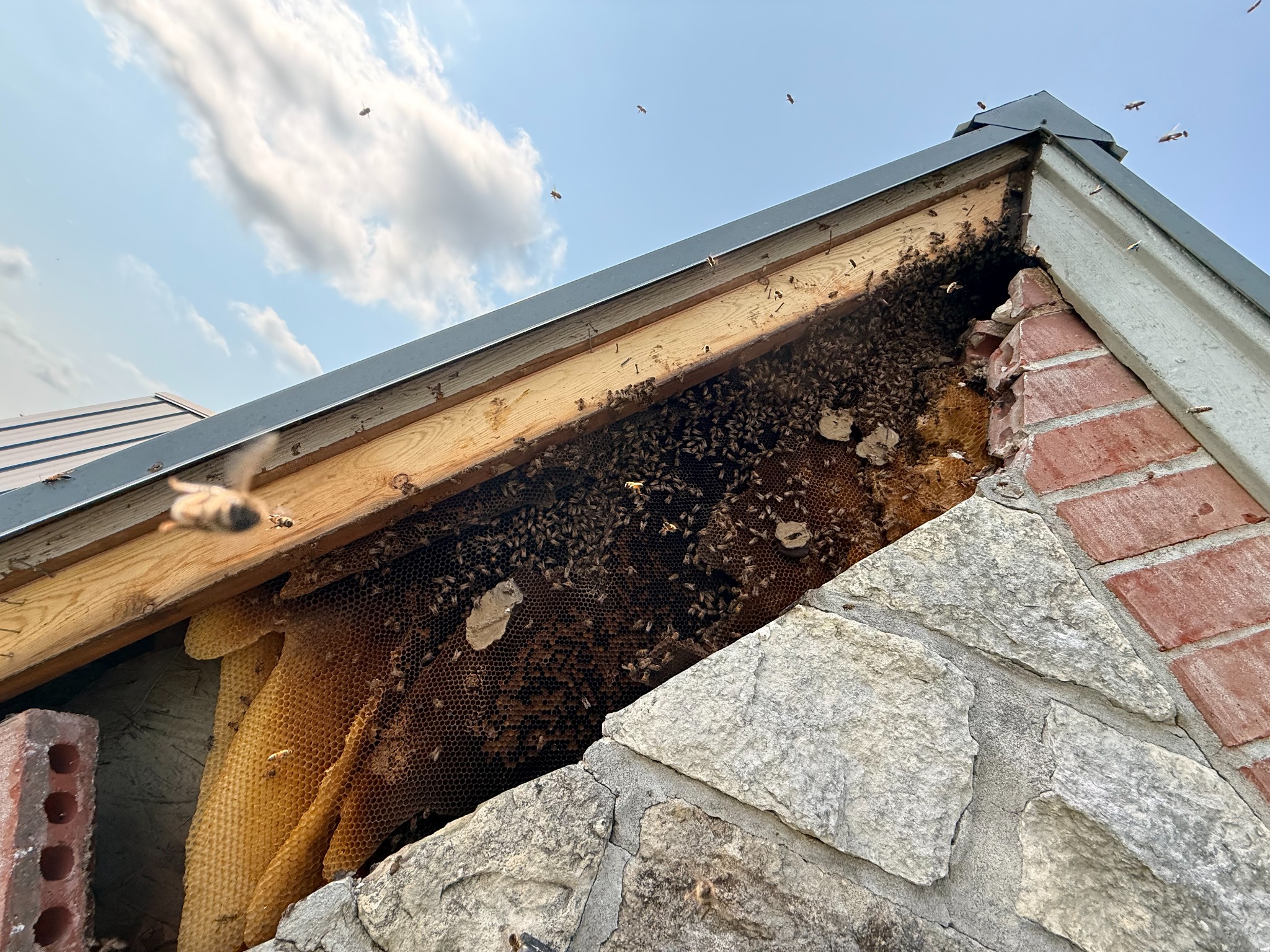
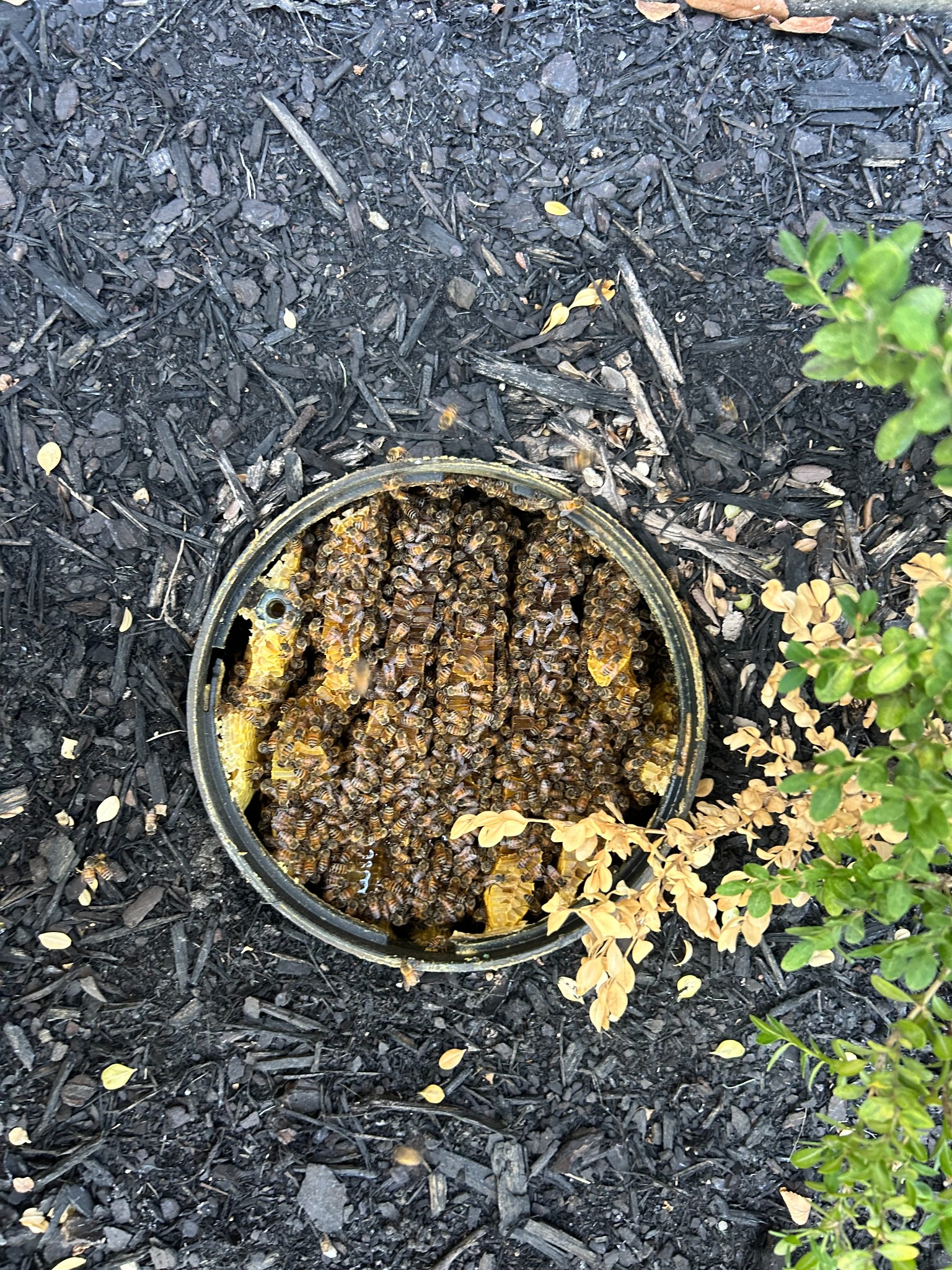
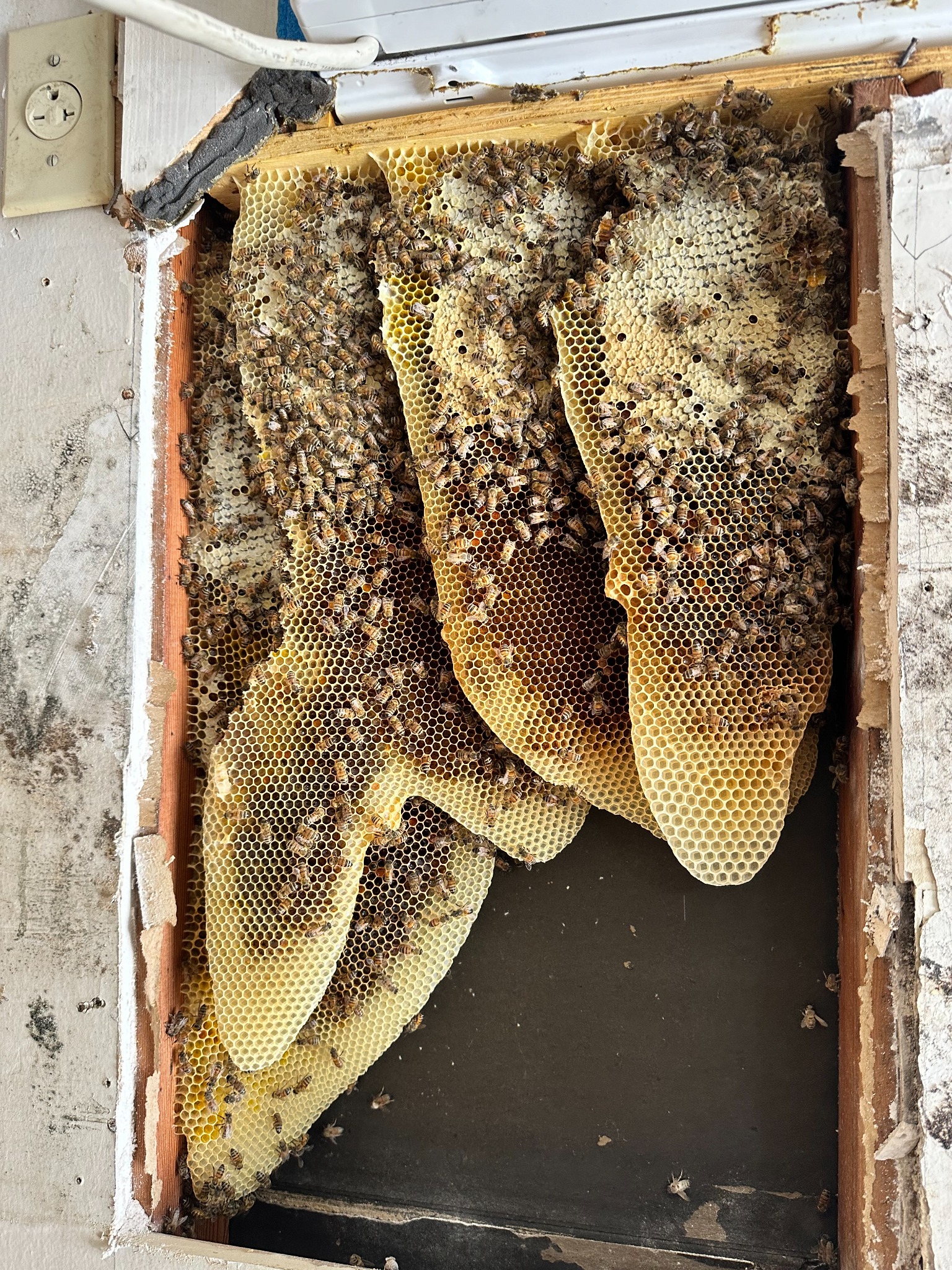
A swarm usually appears as a visible cluster of bees gathered on a tree, fence, shrub, playset, or other outdoor surface. Swarms are temporary while scout bees search for a permanent home. If the bees are repeatedly entering a hole in the structure, they may already be establishing a hive.
Early identification matters because a new swarm may be removed before substantial comb is built. An established hive can contain bees, wax, brood, and stored honey that must be addressed differently.
When the bees are clustered in an accessible location and have not moved into a structure, we can often collect the swarm and relocate it.
Our proprietary repellent approach may be appropriate for newer hives or locations that cannot reasonably be opened, including certain trees, chimneys, and masonry cavities. We will explain the expected timeline and whether follow-up sealing is recommended.
For established structural colonies, full removal is generally the most complete solution. We carefully access the cavity, remove the bees, comb, and honey, clean the area, pack the space with insulation when appropriate, and reassemble the access area within the limits described in the estimate.
Removing or killing only the visible bees does not remove the material inside the structure. Abandoned comb and honey can leak, stain finishes, attract ants or roaches, and draw future swarms to the same cavity. Addressing the entire situation helps protect the home and reduces the chance of repeat problems.
We serve Little Elm and nearby communities including Frisco, The Colony, Prosper, Celina, and Lewisville. View all of our North Texas service areas.
A steady stream of bees entering and leaving the same gap is one of the clearest signs. Buzzing inside a wall or ceiling, honey staining, or activity that continues for several days can also indicate an established colony.
No. Sealing an active entrance can trap bees in the structure and force them toward interior living spaces. The colony should be evaluated first, and sealing should be completed at the appropriate stage of the removal process.
Whenever the situation allows, our goal is to use a removal approach suited to the colony and structure. The safest and most effective method depends on hive age, accessibility, condition, and location.
Pricing depends on whether the bees are a temporary swarm, a newer inaccessible hive, or an established colony requiring structural access. Photos of the activity and entry point usually help us recommend the right service and provide an estimate.
Warranty terms depend on the service performed. Full hive removals include a two-year warranty against a new swarm occupying the same location, subject to the written service terms.
If you are seeing concentrated bee activity at your Little Elm property, call 972-439-6516 or request a free estimate online. Home & Hive will help identify what the bees are doing and recommend the most appropriate next step.
Please fill out the form below and we will get back to you shortly.
or call us at:

 info@homeandhive.com
 5.0
5.0
 5.0
5.0