


Honeybees in Melissa may establish large colonies inside wall and joist cavities or gather in trees before moving to a permanent nesting location. Home & Hive provides professional honeybee removal in Melissa, Texas, with solutions based on the insects involved, the colony’s age, and the accessibility of the nest or hive.
We are a family-owned North Texas company with more than a decade of specialized bee-removal experience. After identifying the insects and locating the colony, we may recommend live swarm removal, our Bee Repellent Method, complete hive removal, or targeted treatment for yellow jackets.
Melissa’s newer neighborhoods, rural properties, mature trees, and detached structures offer many protected spaces for honeybees. A small exterior opening can lead to a much larger wall, floor, ceiling, or joist cavity where a colony can expand out of sight.
Common locations include:
These photos show actual Melissa projects: a large honeybee hive exposed inside a structural joist area, a honeybee colony clustered in a tree, and a Southern yellow jacket nest. Honeybees and yellow jackets require different services, so accurate identification is one of the most important parts of the evaluation.
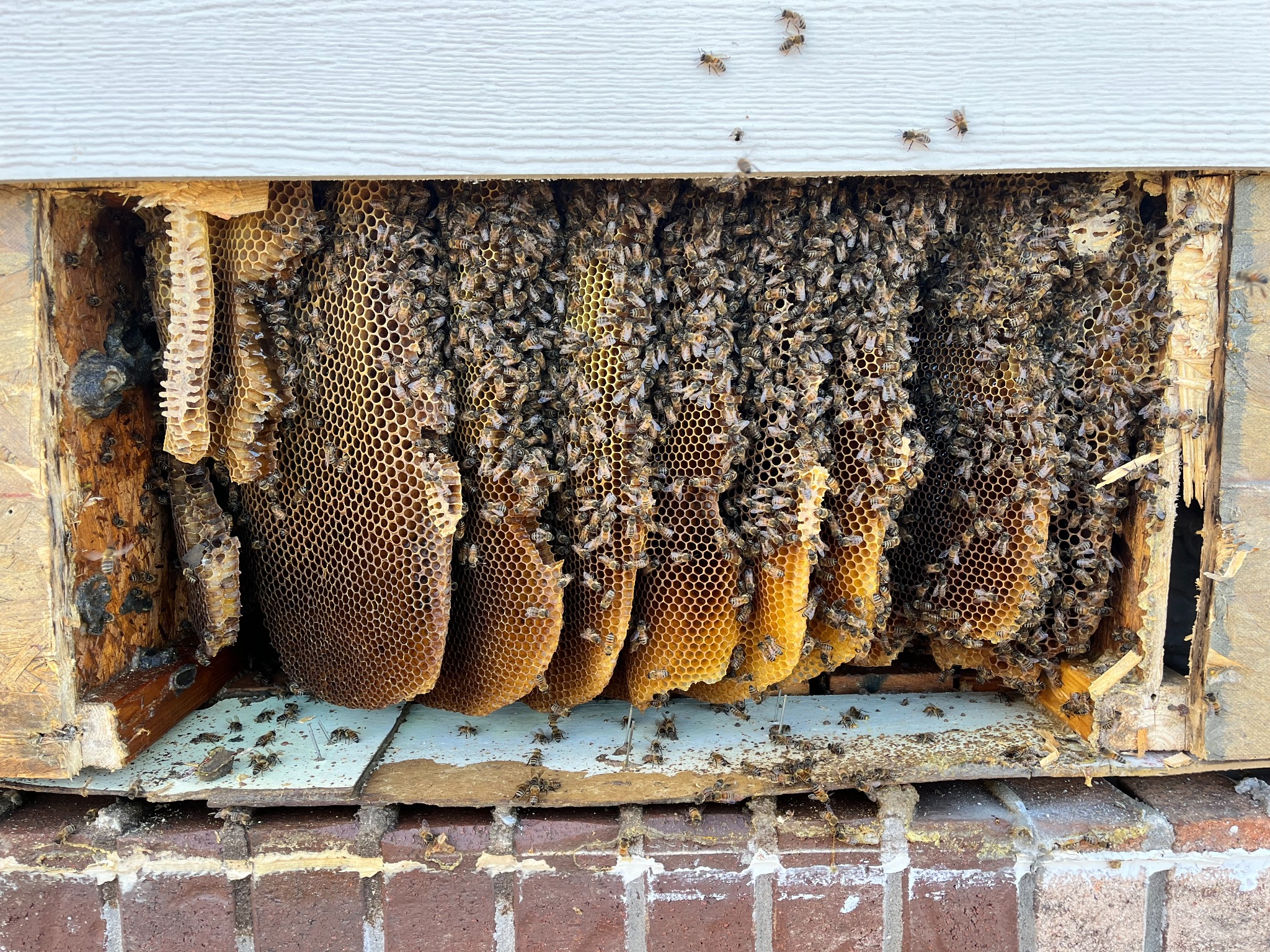
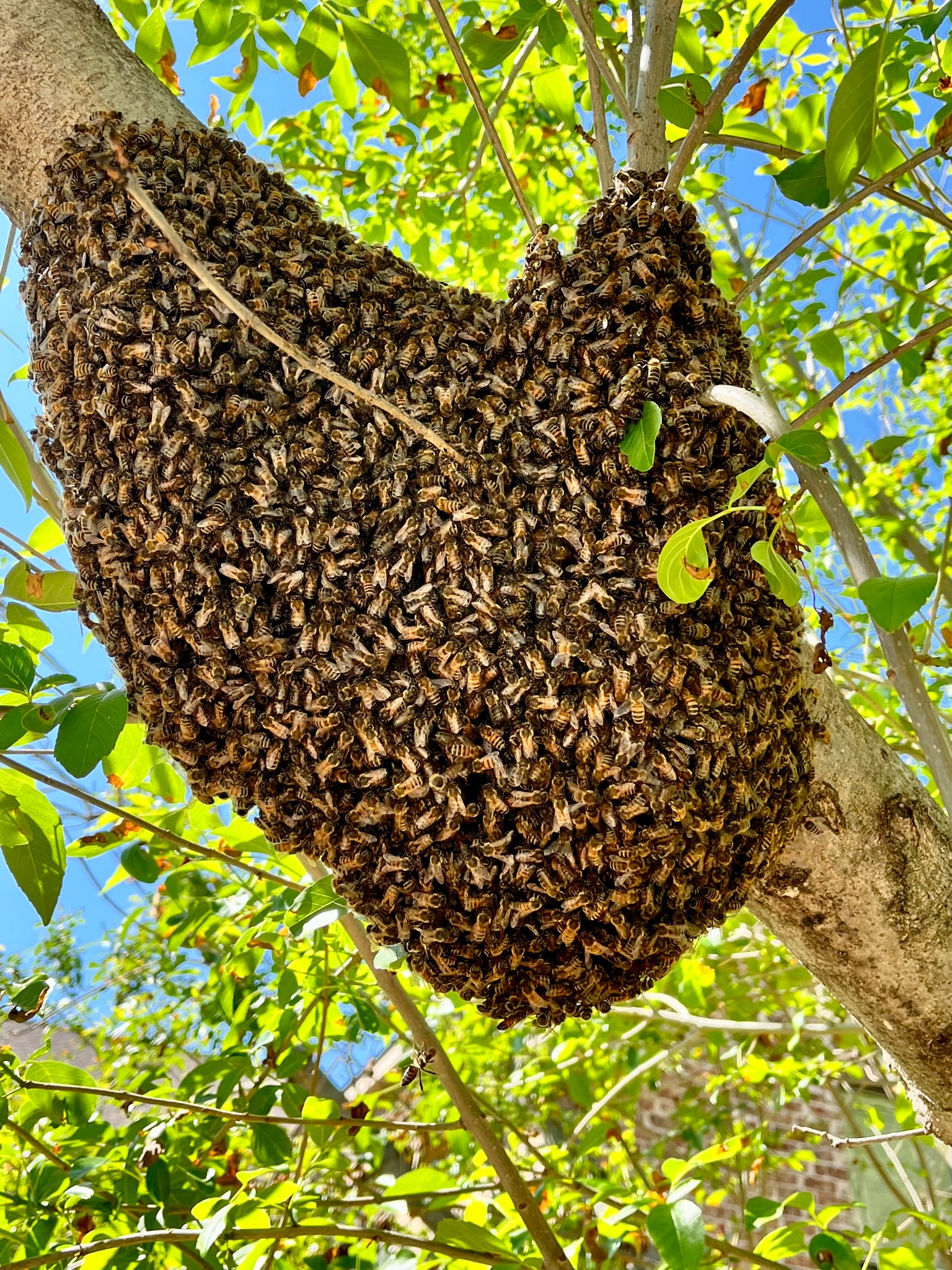
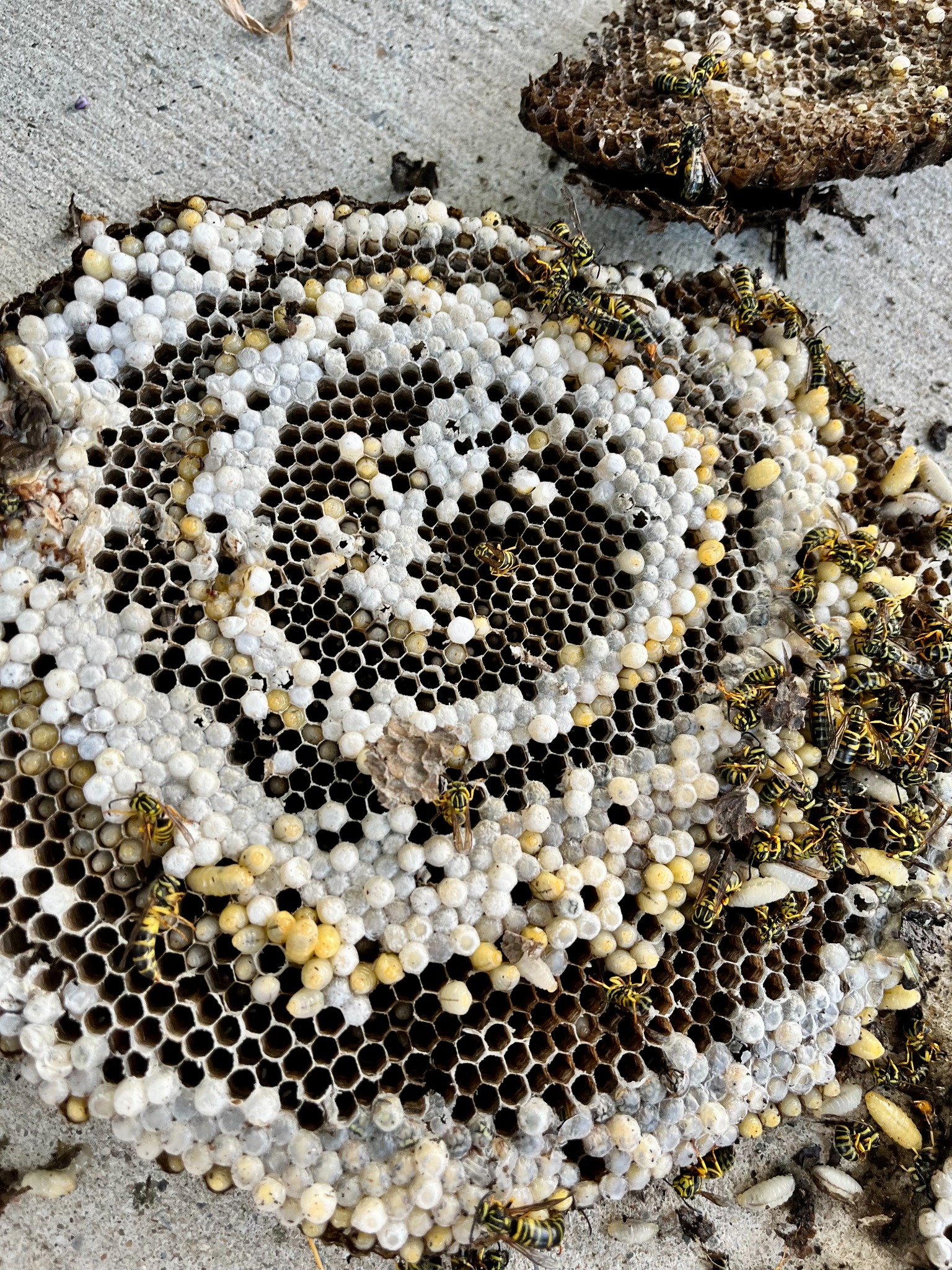
Honeybees are fuzzy, golden-brown pollinators that build wax comb for brood and honey storage. They may form a temporary swarm on a tree or establish a permanent colony inside a protected cavity.
Southern yellow jackets have smoother, sharply defined yellow-and-black bodies and build layered paper nests. Their colonies may be underground, beneath mulch, or inside structural voids. Yellow jackets can be highly defensive around their nest and may sting repeatedly, so the area should not be disturbed.
Photos are often helpful, but close-up identification should be done from a safe distance. Avoid spraying or opening an active nest before it has been evaluated.
A temporary swarm usually appears as a dense cluster with little or no visible comb. When the swarm is accessible, we can collect and remove it before the bees move into a wall, soffit, tree cavity, or other permanent location.
For certain newer or difficult-to-access honeybee colonies, our Bee Repellent Method may be appropriate. We inspect the site first because the colony’s age, strength, location, and surrounding construction determine whether this service is a good fit.
Established honeybee colonies in joist spaces, walls, soffits, and other accessible cavities often require complete removal. We open the necessary area, remove the bees, wax comb, brood, and honey, clean and prepare the cavity, add insulation where appropriate, and reassemble the access area as closely as conditions allow.
Yellow jacket service focuses on controlling the active colony and removing accessible nest material when possible. Because yellow jackets are not honeybees, live honeybee relocation methods are not used for these nests.
Removing or treating only the bees visible outside does not eliminate the comb and honey hidden between joists or inside walls. Remaining hive material can attract ants, wax moths, small hive beetles, rodents, and future bee colonies. Honey may also soften and leak into building materials during hot North Texas weather.
A complete hive removal addresses the colony and the accessible hive material inside the cavity rather than only the exterior entrance.
Honeybees visiting flowers are normal. A steady stream of bees using one structural opening is a stronger indication that a colony is living inside.
Yes. Joist spaces can provide a large protected cavity where bees build multiple sheets of comb. The Melissa project shown above demonstrates how extensive a hidden structural hive can become.
No. A temporary swarm typically has no established comb, while an exposed hive may contain visible wax comb, brood, and stored honey. We evaluate the cluster before recommending a service.
Yellow jackets generally have smooth bodies with bright yellow-and-black markings and build paper comb. Honeybees are fuzzier and build wax comb. If the insects are entering a hidden cavity, send a clear photo or video from a safe distance rather than approaching the nest.
No. Sealing an active entrance can trap bees inside or force them farther into the structure. The colony should be evaluated and properly removed or treated before entry points are closed.
Yes. We remove accessible comb, brood, honey, and bees from the opened cavity. Addressing the hive material helps reduce leakage, odors, secondary pests, and attraction for future swarms.
If you have honeybees entering a structure, a colony in a tree, or suspected yellow jackets around your Melissa property, contact Home & Hive for identification and service recommendations. Photos of the insects, entrance, or visible nest are helpful when determining the correct approach.
Contact Home & Hive to request professional bee or yellow jacket service in Melissa, Texas.
Please fill out the form below and we will get back to you shortly.
or call us at:

 info@homeandhive.com
 5.0
5.0
 5.0
5.0