


Home & Hive provides professional honeybee removal in Parker, Texas for swarms, exposed colonies, and established hives inside homes and utility spaces. Parker properties often include custom homes, acreage, mature landscaping, and complex rooflines. Those features can create sheltered cavities in soffits, walls, and outdoor boxes where bees may establish a colony.
When bees repeatedly use one opening, the activity may be more than a passing swarm. An established hive can include thousands of bees, brood, honey, and many sheets of comb. Avoid sealing an active entrance or spraying into the opening before the colony is evaluated, because bees may be driven farther into the structure and hive material can remain behind.
We first determine whether you have a temporary swarm or an established colony. A resting swarm usually has no comb and may be handled with our swarm removal service. If bees have built comb in a soffit, wall, meter box, or other cavity, a full hive removal is generally the appropriate service.
During accessible structural removals, we open the affected area, remove the bees and accessible hive material, and prepare the cavity for repair and exclusion. We also offer a bee repellent method for qualifying situations. The correct recommendation depends on the hive location, access, colony size, and condition of the structure.
The projects below show three common Parker-area situations: a mature soffit colony, a hive in a water shutoff box, and a swarm resting in a tree. Each requires a different response.
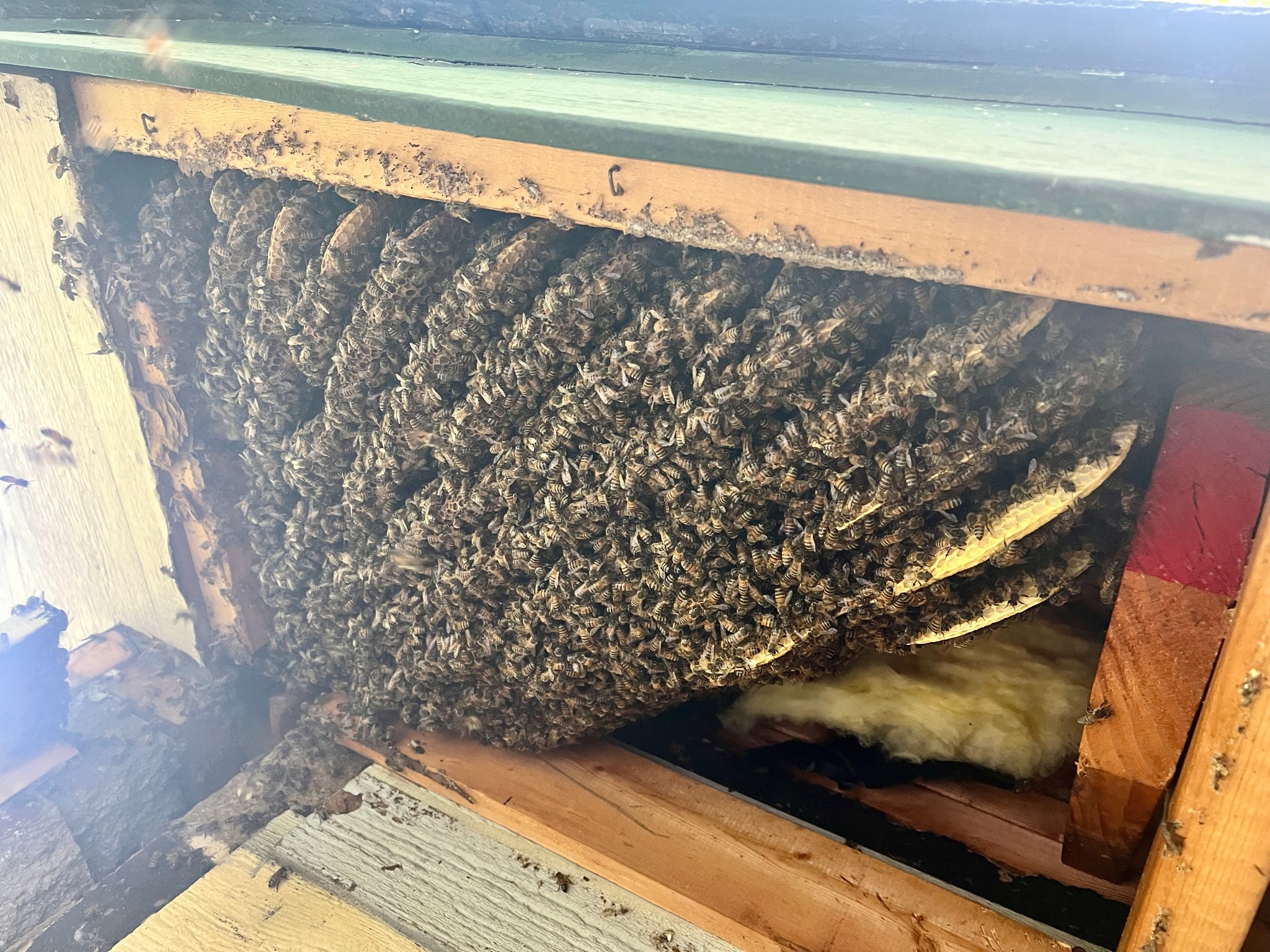
Soffits offer warmth, protection, and space for comb. The visible entrance may be tiny even when the colony fills several framing bays. Once access is opened, we remove accessible comb, brood, honey, and bees rather than treating only the exterior flight opening.
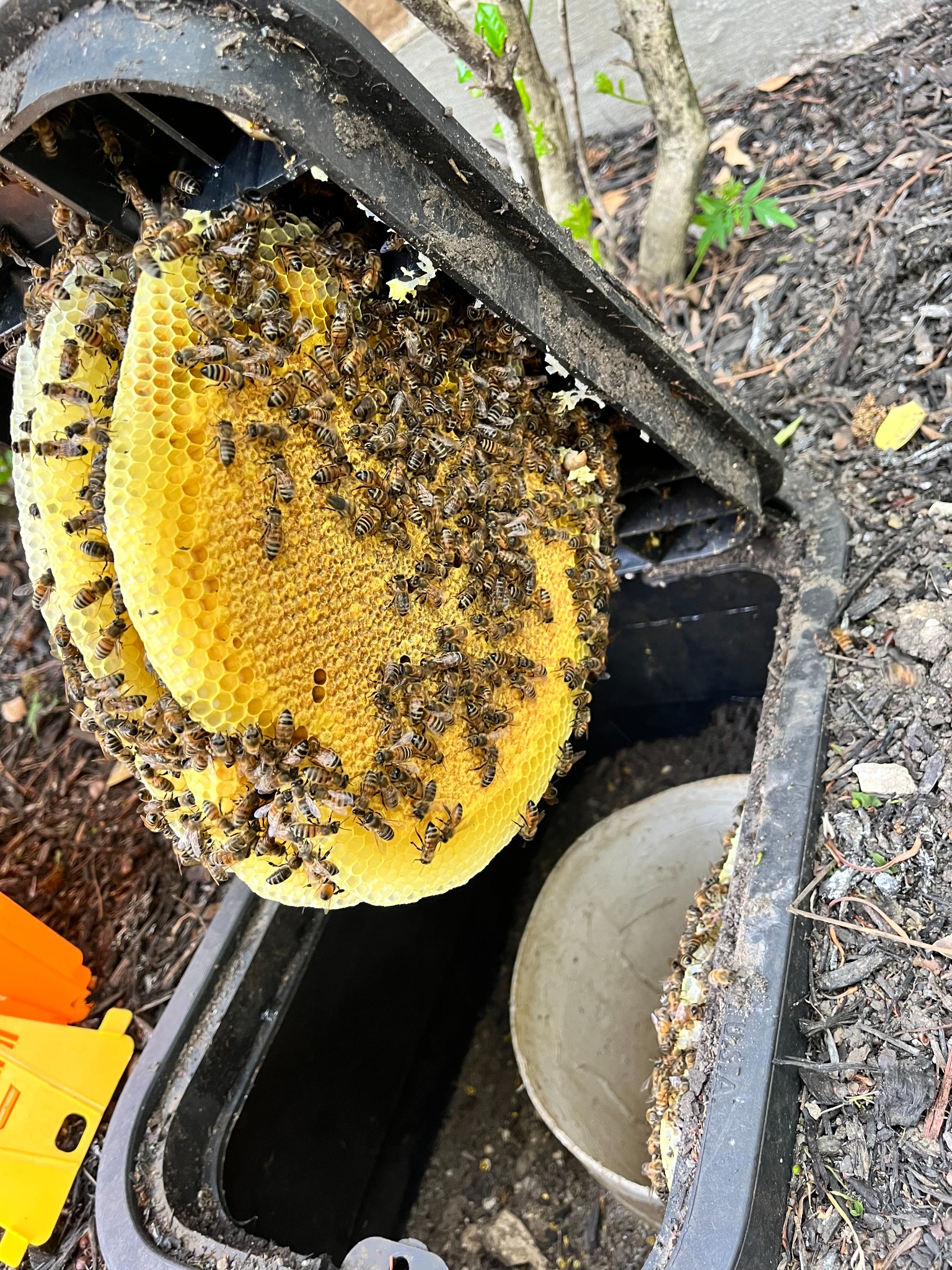
Ground-level utility boxes can provide a protected space for bees, especially when openings allow easy access. Do not reach into an active box or attempt to operate a valve surrounded by bees. Keep people and pets away and arrange for evaluation before utility work is performed.
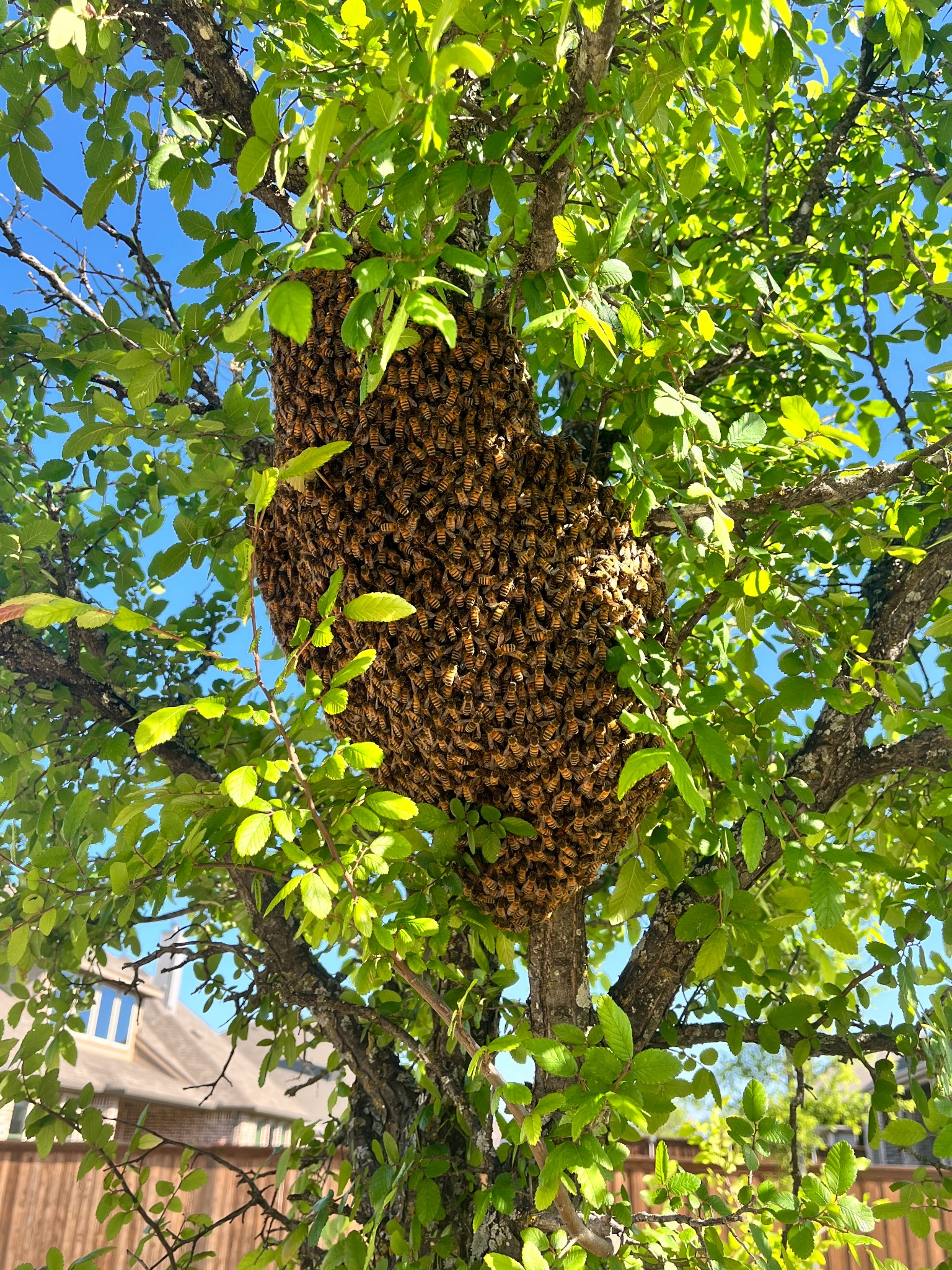
A tree swarm is typically a temporary cluster protecting a queen while scouts search for a new nesting site. It may stay for a few hours or several days. Early removal helps prevent the swarm from moving into a nearby soffit, chimney, wall, or shed. Keep a safe distance and avoid shaking, spraying, or disturbing the branch.
Bees can be removed from an entrance while honey and wax remain hidden inside. Leftover hive material may leak, stain finishes, attract ants or moths, create odors, or draw a future swarm to the same cavity. When full access is appropriate, removing accessible comb and stores is an important part of resolving the problem.
For photographs, stand well back and use zoom. A clear view of the insects and entry point can help us distinguish honeybees from wasps or yellow jackets.
No. Sealing an active entrance can trap bees in the cavity or force them toward the interior. The colony should be evaluated and addressed before repair and exclusion work.
Yes. These boxes can provide a protected cavity. Never place your hand into a box with active bees, even if only a few insects are visible at the opening.
A swarm is usually a temporary ball of bees without comb. If wax comb, brood, or stored honey is visible, it is an established exposed hive and requires a different removal plan.
During a full hive removal, we remove accessible comb, honey, brood, and bees from the opened cavity. This helps reduce leakage, pests, odors, and attraction for future colonies.
Repair and exclusion reduce access, but homes have many possible construction gaps. After removal, the opened area should be properly restored and other likely entry points can be evaluated for sealing.
If bees are entering a soffit, wall, roofline, utility box, or another part of your Parker property, contact Home & Hive. Photos of the bee activity and location are helpful when selecting the correct service.
Contact Home & Hive to request professional honeybee removal in Parker, Texas.
Please fill out the form below and we will get back to you shortly.
or call us at:

 info@homeandhive.com
 5.0
5.0
 5.0
5.0