


Honeybees in Princeton may settle in a tree for a few hours, move into a roof or wall cavity, or build a colony in an unexpected place such as a pergola, joist space, shed, boat, or storage compartment. Home & Hive provides professional honeybee removal in Princeton, Texas, with recommendations based on the colony’s location, accessibility, and stage of development.
We first determine whether the bees are a temporary swarm or an established hive containing comb, brood, and honey. Services may include swarm removal, the bee repellent method for appropriate situations, or full hive removal when a structural cavity must be opened and cleared.
Princeton’s rapid residential growth creates many potential nesting spaces. Small construction gaps at roof edges, siding, soffits, trim, and outdoor structures can lead to much larger protected cavities. Rural and recreational properties may also have boats, trailers, workshops, and equipment that remain undisturbed long enough for a colony to become established.
Bees flying to one exact opening throughout the day usually indicate a hive inside. A dense cluster hanging openly without wax is more likely a swarm. Do not seal an entrance or open a compartment until the bees have been evaluated.
These Princeton projects show how different nesting locations require different access and removal plans.
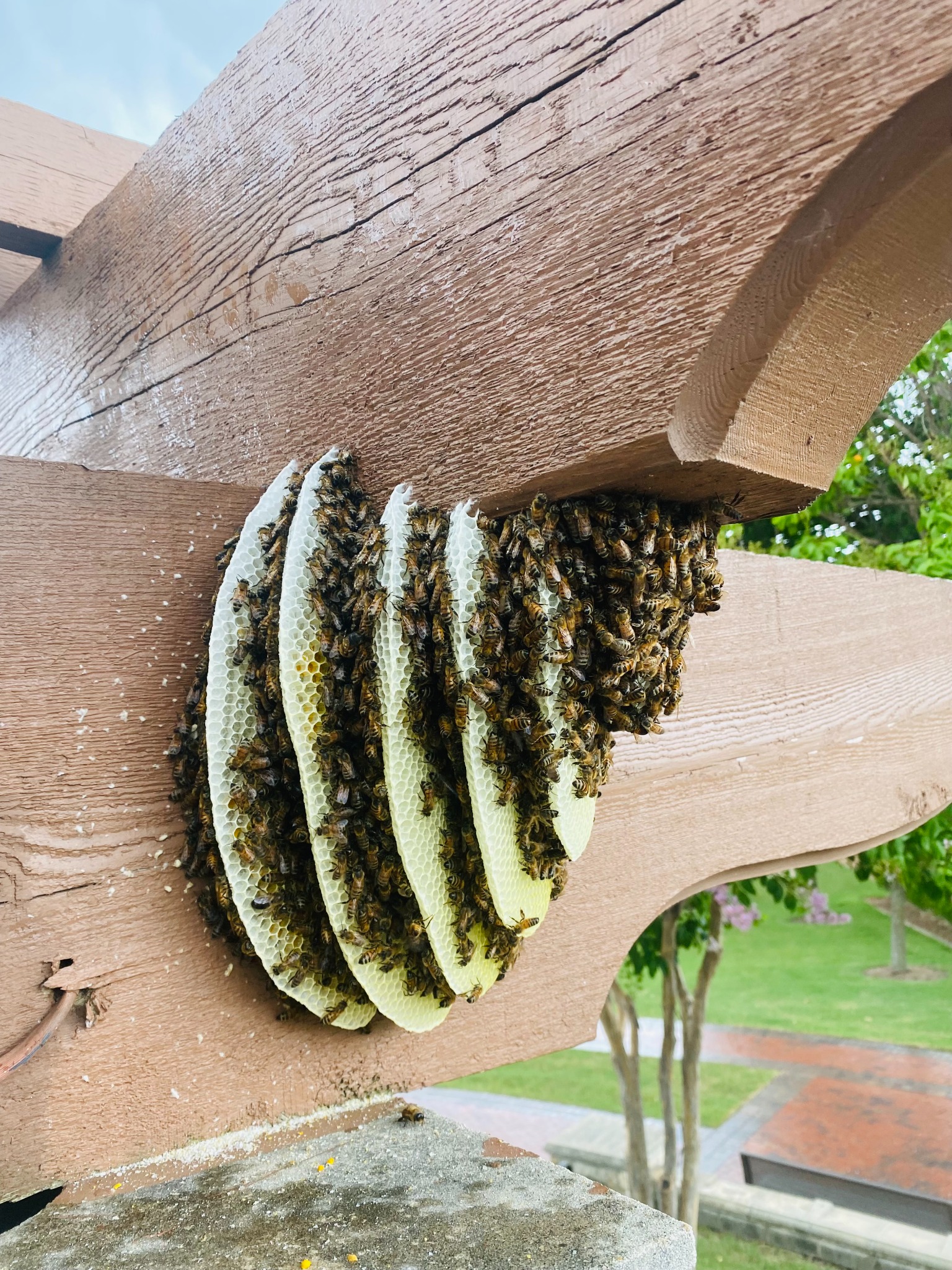
Pergolas and patio structures offer shade and protection from weather. An exposed hive may be visible from below, but homeowners should still keep their distance because vibration and activity around the structure can disturb the colony.
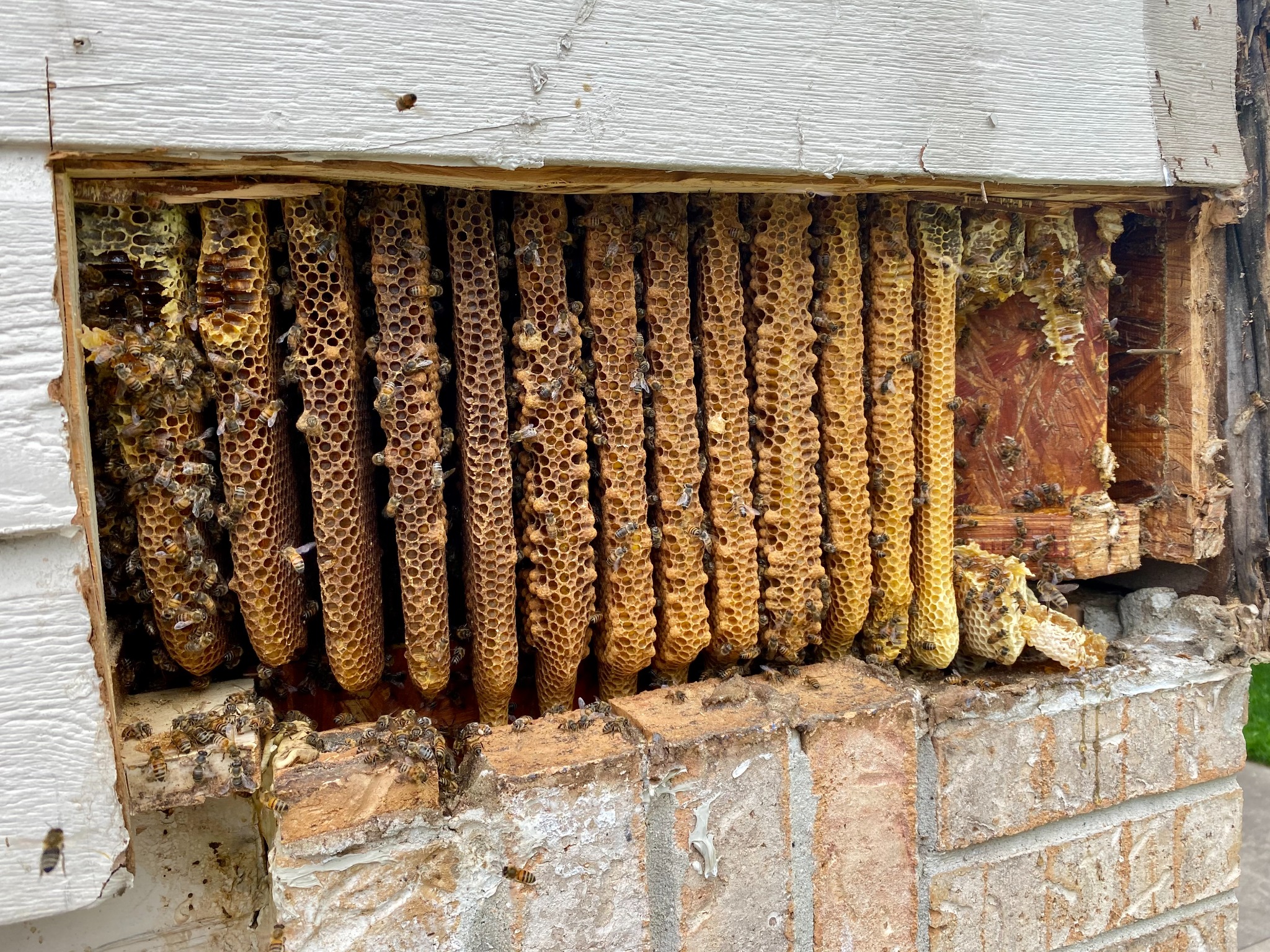
Joist and wall spaces can conceal many sheets of comb even when the exterior entrance is only a small crack. A full removal allows accessible bees, honey, brood, and wax to be removed instead of leaving hive material inside the building.
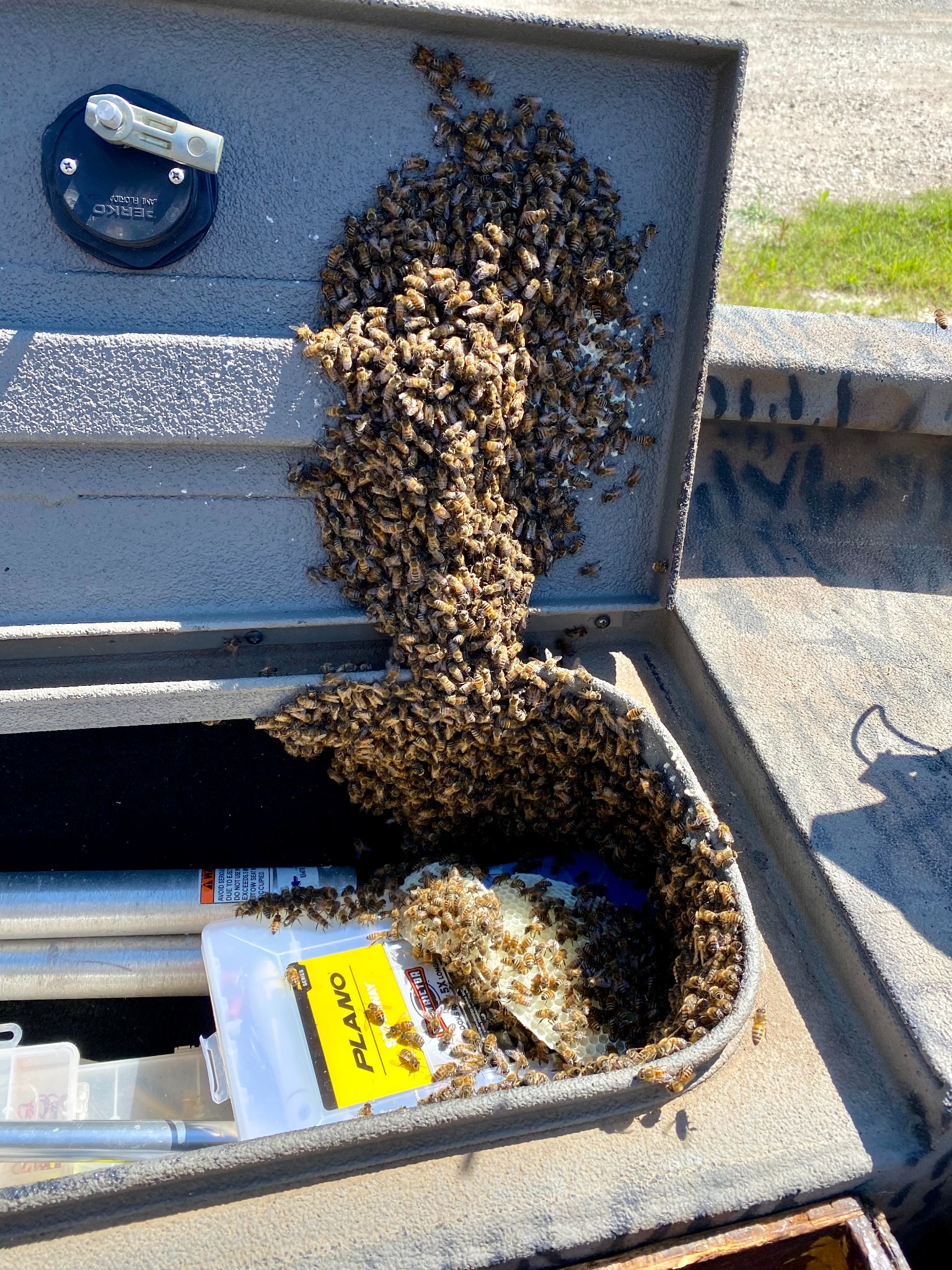
Boats and equipment compartments may sit undisturbed and provide a dark, dry cavity. If bees are using a hatch, seat base, or compartment opening, do not start or move the equipment until the colony’s position is known.
A swarm is a traveling group searching for a permanent home. When collected before it enters a structure, the removal is usually simpler because there is little or no comb.
Our repellent method can be useful for certain new or inaccessible colonies. It is not the best fit for every established hive, so we consider the amount of comb, the cavity, and the bees’ activity before recommending it.
When bees have built a mature colony in a joist, wall, roof, or other accessible cavity, full removal addresses both the bees and the hive material. We carefully plan the opening, remove accessible comb and honey, clean the cavity, and address entry points according to the project scope.
Wax, brood, and honey can remain after the adult bees leave or die. In Texas heat, stored honey may leak and wax may soften. The material can also attract ants, wax moths, small hive beetles, rodents, or a future swarm. For mature accessible structural hives, removing the comb is an important part of a lasting solution.
Yes. When conditions permit, we remove and relocate honeybees. Safety, access, construction, and colony condition determine the exact approach.
Yes. Enclosed compartments can provide the protected volume honeybees need. Leave the boat stationary and avoid opening occupied compartments until they have been inspected.
Yes. We remove exposed colonies and evaluate colonies hidden inside beams or columns. The method depends on whether the comb is open or concealed.
A true swarm may depart, but bees repeatedly using one opening or producing comb are establishing a hive. Early evaluation often prevents a small colony from becoming a large structural removal.
No. Sealing an active hive can force bees into another part of the building. Removal or treatment should occur before exclusion.
If honeybees are gathering on a pergola or entering a joist, roof, wall, boat, or equipment compartment, Home & Hive can identify the situation and explain the appropriate removal options.
Contact Home & Hive to request professional honeybee removal in Princeton, Texas.
Please fill out the form below and we will get back to you shortly.
or call us at:

 info@homeandhive.com
 5.0
5.0
 5.0
5.0