 info@homeandhive.com


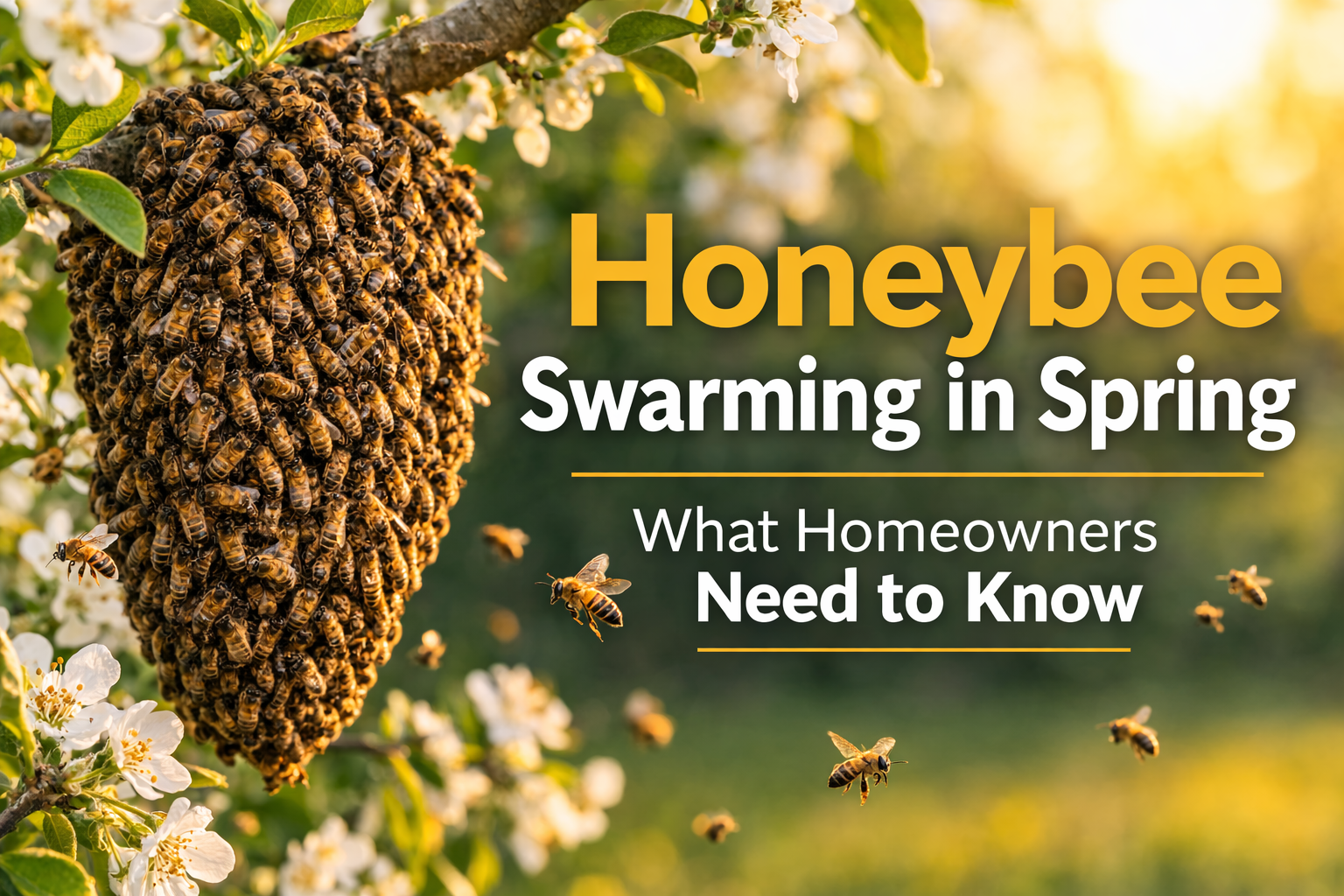
Honeybee Swarming in Spring: What Homeowners Need to Know
Every spring in Texas, homeowners start noticing increased bee activity around their homes, trees, fences, and neighborhoods. In many cases, what people are seeing is not an aggressive hive but a honeybee swarm.
A swarm of bees can look alarming at first, especially when thousands of bees gather in one spot. But in most cases, swarming is a natural part of the honeybee lifecycle.
At Home & Hive, we help homeowners in Celina and surrounding North Texas communities understand what swarming means, when it becomes a problem, and when it is time to call a professional.
What Is a Honeybee Swarm?
A honeybee swarm happens when an existing colony becomes too large and part of the colony leaves to form a new home somewhere else. Usually, the old queen leaves with a large group of worker bees and temporarily gathers on a tree branch, fence, mailbox, shrub, or part of a home while scout bees search for a permanent nesting site.
This temporary cluster is called a swarm.
Swarming is most common in the spring, when bee colonies are growing quickly and wildflowers, trees, and landscaping begin blooming across North Texas.
Why Honeybees Swarm in the Spring
Spring is peak swarm season because honeybee colonies are expanding fast after winter. As nectar and pollen become more available, the colony population increases. Once the hive becomes overcrowded, the bees may split and swarm.
This is a normal reproductive behavior for honeybees and is one of the main ways new colonies are formed in nature.
In Celina and nearby areas, swarm activity usually increases as temperatures warm up and flowering plants become more active.
Are Swarming Honeybees Dangerous?
In most cases, a swarm is less aggressive than an established colony.
That is because swarming bees are focused on protecting their queen and finding a new home, not defending honey or brood inside a hive. Even so, they should still be taken seriously and given space.
You should never:
-
Disturb the swarm
-
Spray the bees with water or chemicals
-
Throw objects at them
-
Attempt to remove them yourself
If the swarm is in a high-traffic area, near a front door, or close to children or pets, it is best to have it professionally evaluated.
How Long Does a Bee Swarm Stay in One Place?
Some swarms stay only a few hours. Others may remain for a day or two while scout bees search for a suitable place to move.
The concern is that if they find an opening in your home, wall, chimney, roofline, soffit, or another structure, they may move in and begin building comb.
That is when a temporary swarm can become a much bigger issue.
When a Bee Swarm Becomes a Structural Problem
A swarm hanging on a tree branch is one thing. A swarm entering your home or structure is another.
If bees begin moving into:
-
A wall void
-
Roofline or soffit
-
Chimney
-
Attic
-
Eaves
-
Siding gaps
-
Outdoor structures
they may start building a colony inside the structure. Once that happens, the problem becomes more involved because comb, honey, brood, and bee activity inside the home can lead to ongoing issues.
This is why quick action matters when you notice bees gathering around your house.
Signs Bees May Be Moving Into Your Home
It is a good idea to call a professional if you notice:
-
Bees consistently flying in and out of the same hole or gap
-
A cluster that disappears and is followed by steady bee traffic
-
Buzzing sounds inside a wall or ceiling
-
Bees gathering around vents, eaves, or rooflines
-
Increased bee activity in one area of the home
These signs may indicate that bees are no longer just swarming but are beginning to establish a colony.
What To Do If You See a Honeybee Swarm
If you spot a swarm on your property, the best thing to do is stay calm and keep a safe distance.
Here are the right steps to take:
-
Keep children and pets away from the area
-
Do not disturb the swarm
-
Watch to see whether the bees are simply clustered or entering the structure
-
Take a photo from a safe distance if possible
-
Contact a professional who understands bee behavior and removal options
Trying to handle a swarm yourself can make the situation worse, especially if the bees have already started moving into a structure.
Why Professional Bee Removal Matters
When honeybees are involved, proper evaluation is important. A professional can determine whether the bees are simply resting temporarily or beginning to establish a colony inside your home.
If bees have entered a structure, removal is not just about getting rid of visible bees. It often involves addressing the source of the activity and preventing future problems.
At Home & Hive, we help homeowners in Celina identify bee issues early so they do not turn into larger structural problems.
Spring Bee Activity in Celina, TX
As temperatures rise in Celina, Prosper, Frisco, McKinney, and surrounding North Texas communities, homeowners are much more likely to notice swarms and increased bee activity.
Spring is the best time to stay alert for:
-
Bee clusters on trees or fences
-
Bees gathering near rooflines
-
Bees entering small openings in the home
-
New activity around sheds, patios, and outdoor structures
The earlier you catch the problem, the easier it is to address.
Need Help With Swarming Bees in Celina?
If you are seeing a swarm of bees on your property this spring, it is important to know whether the bees are simply resting temporarily or trying to move into your home.
Home & Hive Pest Control helps homeowners in Celina, TX and surrounding areas respond quickly to bee activity and determine the best next step.
Spring swarms are common, but letting them settle into a structure can create a much bigger problem. If you are unsure what you are seeing, it is always better to have it checked out early.


 5.0
5.0
 5.0
5.0